

Location
Nigeria, Africa
System Capacity
440 KWp
Product Applied
L foot kit with long rails
Grid Connection
June 2026
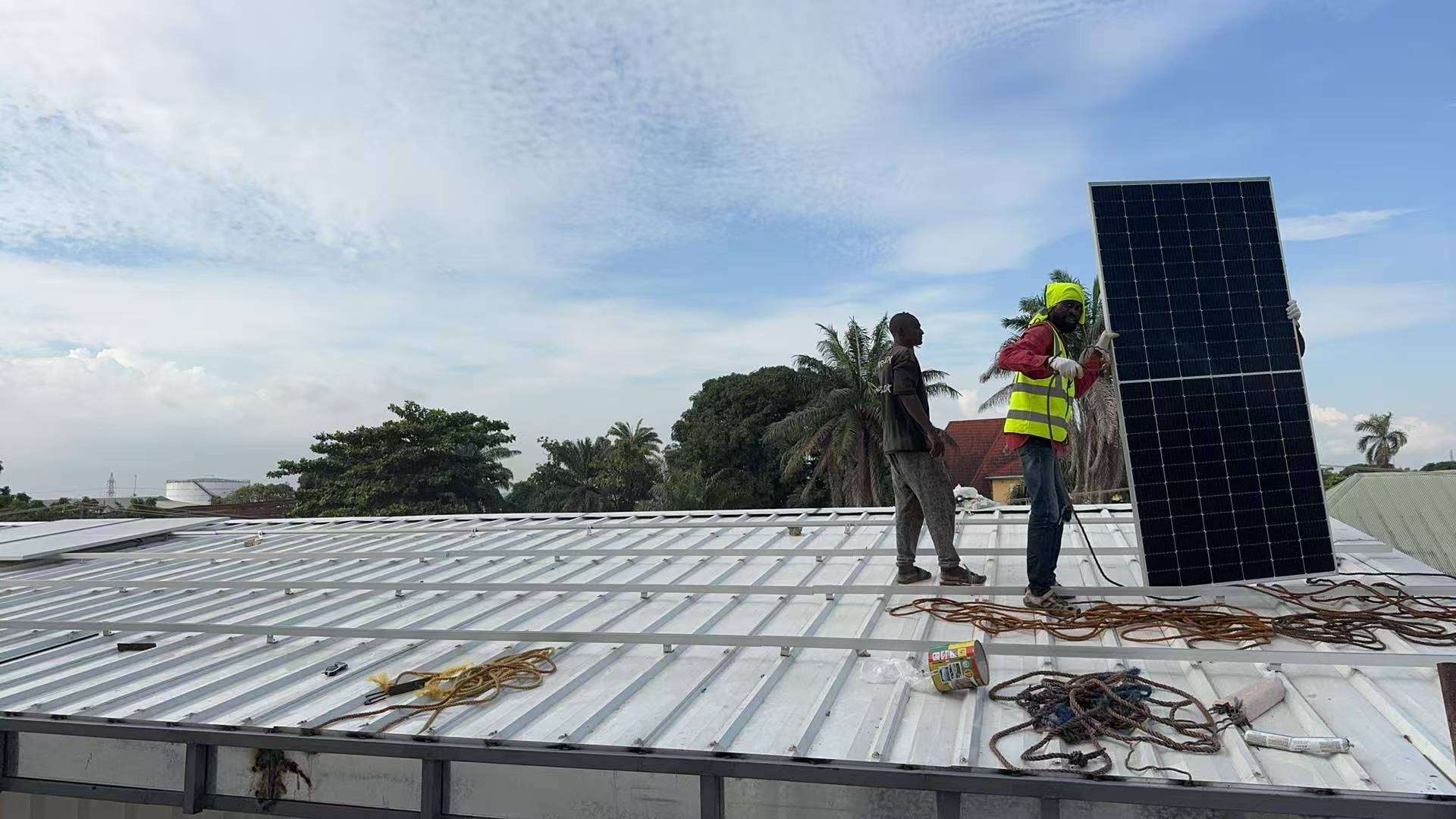
This project overview outlines a 440 kWp solar PV installation designed for a trapezoidal metal roof in Nigeria. Given the scale and the specific environmental conditions in the region, this installation prioritizes structural integrity, long-term durability, and optimized energy yield.
To ensure your 440 kWp installation in Nigeria is resilient, efficient, and long-lasting, our solution centers on a high-grade L-Foot and Long Rail mounting system specifically engineered for trapezoidal metal roofs. By emphasizing structural precision and environmental protection, this approach mitigates the risks associated with Nigeria’s tropical climate.
We strictly adhere to crest-mounting (fixing to the high point of the roof rib) rather than valley-mounting.
The use of long aluminum rails provides a continuous, stable foundation that is superior to point-load systems.
Industrial facilities in Nigeria frequently struggle with high diesel costs and unreliable grid power. Transitioning to solar energy can cut monthly electricity expenses by up to 70%, allowing businesses to redirect these savings toward expansion, staff development, or improved services.
Beyond immediate operational savings, solar adoption improves a company's corporate social responsibility (CSR) profile and can increase the overall property value. Furthermore, businesses can capitalize on government incentives, such as import duty exemptions on solar components, to shorten the return on investment (ROI) period, typically achieving full recovery within 3 to 5 years.
leave a message
Scan to Wechat :

Scan to WhatsApp :