

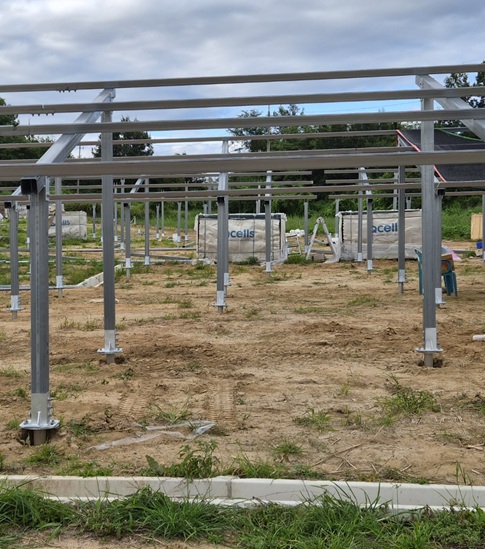
Location South Korea, Asia System Capacity 605 KWp Product Applied Ground Mounting System Grid Connection October 2026 Project Overview This 605 kWp ground-mounted solar project in South Korea features a concrete-free ground screw foundation paired with a high-strength carbon steel square tube structure for rapid deployment and exceptional stability. Currently, the main mounting framework is fully assembled, and the staged solar modules are ready for immediate installation. The Challenge Geological & Environmental Constraints: The site required a zero-concrete, non-disruptive installation approach. The foundation system had to overcome potential variations in soil bearing capacity and settlement risks to achieve high-strength anchoring without damaging the original terrain. Extreme Weather Loads: Exposed to heavy winter snowfalls and summer typhoons in South Korea, the mounting array had to comply with stringent local building codes for ultimate wind and snow loads, while guaranteeing superior corrosion resistance for an outdoor lifespan of over 25 years. High Labor & Installation Costs: Driven by expensive local construction labor rates, a critical engineering challenge was maximizing the system's prefabrication level to completely eliminate on-site cutting and welding. This was essential to accelerate the installation schedule and control overall project costs. Our Solution ① Concrete-Free Rapid Deployment: Flanged ground screw piles serve as the foundation. Driven directly into the graded earth, this method completely eliminates the excavation, pouring, and curing times associated with traditional concrete footings. This significantly accelerates the civil works schedule while minimizing environmental disruption. ② High-Compression Square Tube Columns: The columns feature carbon steel square tube sections. Compared to traditional C-channel or H-beam profiles, the square cross-section delivers superior mechanical resistance against torsion and multi-directional loads, providing enhanced stability against heavy wind and snow conditions. ③ 100% Bolted Assembly: The above-ground square columns are rigidly secured to the ground screw flanges using thick base plates and heavy-duty bolts. The upper inclined beams and longitudinal purlins are manufactured with high-precision pre-punched holes, allowing for a seamless, weld-free on-site assembly that maximizes international field installation efficiency. The Result & Impact Drastic Cost & Schedule Reduction: Thanks to the 100% prefabricated bolted connections and ground screw foundations, time-consuming concrete pouring and complex on-site welding were completely eliminated. This significantly slashed expensive South Korean labor costs and accelerated the structural erection phase far beyond traditional methods. Rock-Solid Long-Term Reliability The high-strength carbon steel square tube framework has now been assembled with exceptional precision. This provides a highly resilient, weather-resistant platform for the 605 kWp array, laying a robust foundation for over 25 years of stable, high-yield power generation.
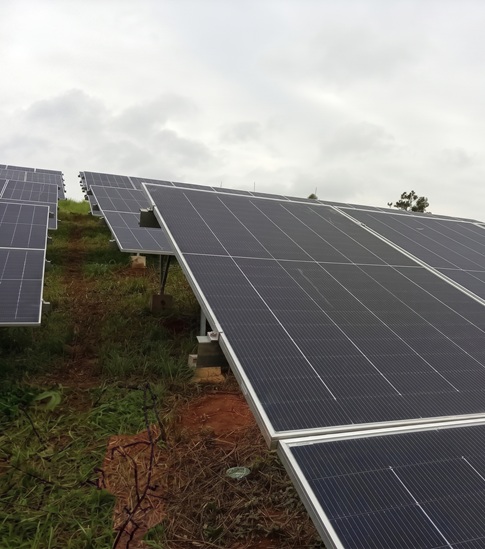
Location Nigeria, Africa System Capacity 200 KWp Product Applied Ground Mounting System Grid Connection August 2026 Project Overview This 200kWp ground-mounted solar mini-grid brings reliable, clean power to a rural community in Nigeria. Built on uneven, sloping terrain, the project bypassed the need for expensive land grading by utilizing a flexible mounting system with height-adjustable telescopic posts. This smart design enabled rapid, cost-effective vertical leveling across the site's natural topography. The Challenge Rugged Terrain: Severe, multi-directional slopes made standard fixed-column mounts structurally unviable. High Civil Costs: Remote logistics made traditional land grading and the use of heavy earthmoving machinery cost-prohibitive and too slow. Rigid Alignment Needs: The 200kWp system demanded a perfectly consistent tilt angle to maximize solar energy yields, despite the uneven ground. Our Solution ① Adaptable Terrain Leveling: Telescopic columns offer ±150mm of vertical adjustment, allowing seamless installation on uneven ground without the cost of site excavation. ② Weather-Resistant Foundations: Elevated, cast-in-place concrete piers keep steel connections above ground moisture, preventing corrosion during West Africa's heavy rainy seasons while ensuring robust stability. ③ 25-Year Durability: All main steel components feature tropical-grade Hot-Dip Galvanizing (ISO 1461, ≥65µm thickness) to withstand extreme humidity, rain, and UV exposure. ④ Rapid Modular Deployment: Factory-assembled kits with standardized bolts eliminate on-site welding and cutting. This simplifies remote Nigerian logistics, lowers labor requirements, and speeds up commissioning. The Result & Impact >60% Reduction in Civil Preparation Costs By utilizing height-adjustable post mechanisms, the project eliminated the need for heavy site excavation and land-grading machinery. The structure adapted directly to the natural slope variations of the terrain, cutting civil earthmoving and site prep overhead by over 60%. Reliable Clean Power for Rural Electrification The successful installation of the 120kWp ground mount system delivers reliable off-grid power to local communities in Nigeria, providing a sustainable infrastructure blueprint for solar mini-grid developments across West Africa.
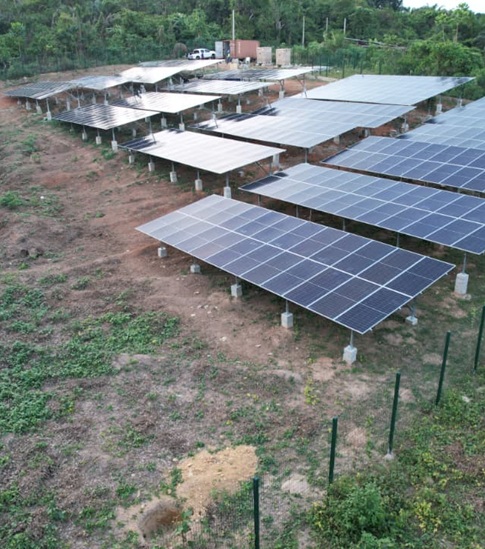
Location Nigeria, Africa System Capacity 120 KWp Product Applied Ground Mounting System Grid Connection July 2026 Project Overview This 120kWp ground-mounted solar mini-grid project was successfully installed in Nigeria, West Africa, providing clean, reliable electricity for rural community electrification. Located on a site characterized by natural undulating terrain and sloping topography, the project utilized a highly adaptable ground mounting system equipped with height-adjustable telescopic posts. This design enabled rapid vertical leveling across multi-directional slopes without requiring costly and time-consuming land grading or earthwork. The Challenge Complex Topography & Unlevelled Site: The project site in Nigeria featured natural undulating terrain with multi-directional slopes and severe ground elevation variations. Standard fixed-column mounting systems were incapable of maintaining a uniform PV array plane across the irregular surface without structural misalignment. Excessive Civil Earthmoving & Grading Overhead: Conventional land leveling and earth excavation would have incurred massive civil engineering costs and severely extended the construction timeline. In addition, deploying heavy site-grading machinery to a remote West African mini-grid location was cost-prohibitive. Array Alignment & System Performance Requirements: To guarantee optimal solar yields for the 120kWp mini-grid, all PV module rows needed to maintain a consistent tilt angle and seamless visual profile despite the uneven ground beneath. Our Solution 1. Engineered Telescopic Height-Adjustable Posts: Integrated vertical post-adjustment mechanisms (up to ±150mm adjustment range) were incorporated directly into the support column design. This allowed installation teams to level array support beams and rails over natural slope variations and uneven ground contours in real time, completely bypassing costly site excavation and earthmoving overhead. 2. Elevated Concrete Pedestal Foundation System: The ground mount array was anchored using cast-in-place elevated concrete piers. Elevating base steel connections safely above ground soil moisture and seasonal rainwater pooling mitigates long-term base corrosion risks during West Africa's tropical rainy season while providing solid foundation stability. 3. Tropical-Grade Hot-Dip Galvanized Anti-Corrosion Protection: All primary structural steel members were treated with heavy-duty Hot-Dip Galvanizing (HDG) in compliance with ISO 1461 (mean coating thickness ≥65µm). This treatment provides maximum environmental resistance against high humidity, intense UV radiation, and heavy rain cycles over a 25-year operational design life. 4. Factory Pre-Assembled Modular Architecture: To simplify remote off-grid logistics in Nigeria, components were delivered as pre-assembled modular kits with standardized bolted connection hardware. This eliminated field cutting and on-site welding, minimized local labor dependency, and significantly shortened overall construction and commissioning timelines. The Result & Impact >60% Reduction in Civil Preparation Costs By utilizing height-adjustable post mechanisms, the project eliminated the need for heavy site excavation and land-grading machinery. The structure adapted directly to the natural slope variations of the terrain, cutting civil earthmoving and site prep overhead by over 60%. Reliable Clean Power for Rural Electrification The successful installation of the 120kWp ground mount system delivers reliable off-grid power to local communities in Nigeria, providing a sustainable infrastructure blueprint for solar mini-grid developments across West Africa.
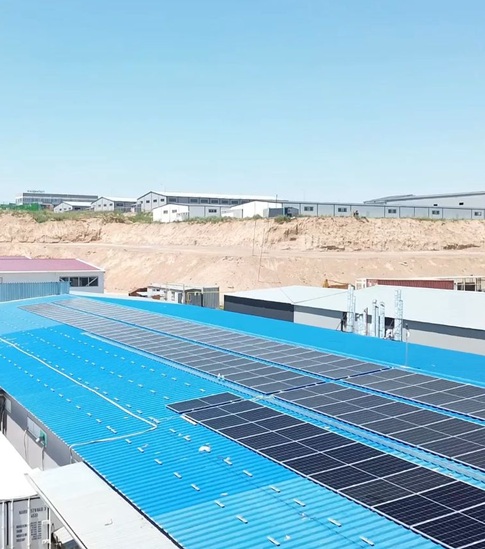
Location Kazakhstan, Asia System Capacity 500 KWp Product Applied Mini Rail Kit Grid Connection July 2026 Project Overview This 500 kWp rooftop solar PV project in Almaty, Kazakhstan, is designed for a commercial trapezoidal color steel roof. Utilizing an aluminum mini rail solution, the system delivers a lightweight design, reliable waterproofing, and high mechanical resilience against Almaty's extreme climate. The Challenge Extreme Climate & Heavy Snow Load Resilience: The Challenge: Almaty experiences severe winters with heavy snow accumulation (up to 5,400 Pa / 1.8 kN/m²) and extreme temperature fluctuations (range from -30°C to +35°C). Heavy snow pressure combined with rapid thermal expansion and contraction puts immense localized stress on short mini-rail anchor points, which can risk fastener shearing or rubber seal fatigue if not precisely calculated. Thin Sheet Pull-Out Strength & Wind Uplift: Industrial color steel trapezoidal sheets are relatively thin (typically 0.5 – 0.8 mm). Unlike traditional long-rail systems that span across structural steel purlins, mini rails rely directly on the roof sheet crests. High wind uplift forces place concentrated tension on self-drilling screws, requiring strict on-site pull-out testing (exceeding 1.2 kN/fastener) to prevent sheet tearing. Our Solution 1. High-Strength AL6005-T5 & Thermal Expansion IsolationEngineered Load Capacity: Structural AL6005-T5 aluminum alloy mini rails engineered to withstand heavy snow accumulation up to 5,400 Pa. Thermal Stress Relief: Short mini-rail segments (150–380 mm) isolate thermal movement locally. This prevents expansion and contraction differential between aluminum and steel sheets from shearing fasteners or stressing panels during Almaty's extreme -30°C to +35°C temperature swings. 2. Crest-Anchored Fasteners with Verified Pull-Out ResistanceHigh Pull-Out Strength: High-grade bi-metal self-drilling screws anchored into sheet crests undergo strict on-site torque verification to ensure pull-out resistance exceeds 1.2 kN per fastener. Wind Uplift Distribution: Optimized mini-rail distribution spreads dynamic wind uplift forces (up to 2,400 Pa) evenly across multiple roof crests, preventing thin steel sheet tearing. The Result & Impact Financial Yield & Energy Independence High Annual Energy Output: Generates ~640,000 – 675,000 kWh of clean electricity annually, perfectly aligning with daytime industrial production demands. Significant Utility Savings: Reduces reliance on the grid during peak tariff periods, delivering an attractive return on investment (ROI) and predictable energy cost hedging. Environmental Impact & Sustainability Carbon Reduction: Offsets approximately 520 metric tons of CO₂ emissions per year. Clean Energy Transition: Replaces the equivalent of ~200 tons of standard coal consumption annually, supporting Kazakhstan’s national carbon neutrality goals.
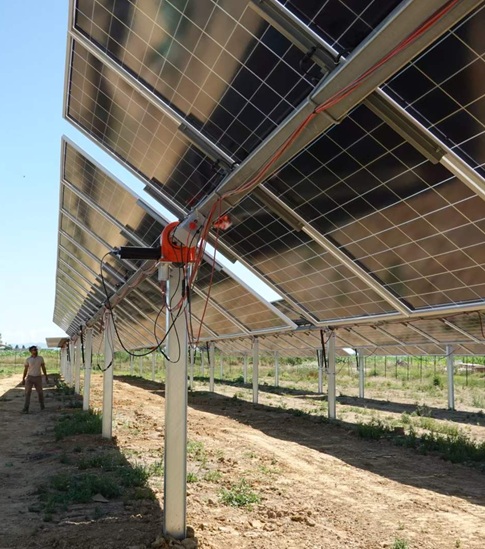
Location Italy, Europe System Capacity 2.0 MWp Product Applied Independent Single Axis Tracker Grid Connection June 2026 Project Overview Located in the sun-abundant region of southern Italy, this 2 MWp utility-scale solar plant was developed to support the local grid with clean, reliable renewable energy. To maximize the Return on Investment (ROI) and capitalize on the high DNI (Direct Normal Irradiance) of the Mediterranean climate, the EPC contractor opted for a smart tracking solution over a traditional fixed-tilt mounting system. The Challenge Undulating Terrain: The designated site featured uneven ground with north-south slopes of up to 15%. Extensive land grading was restricted by local environmental regulations. High Wind Loads: Coastal proximity meant the site is frequently subjected to strong, unpredictable wind gusts, requiring a highly stable structural design. Tight Schedule: The project had a strict commissioning deadline to qualify for regional clean energy incentives. Our Solution For a 2 MWp single-axis solar tracker project in Italy utilizing driven pile foundations, the solution leverages high-performance, cost-effective structural engineering standard to Italian utility-scale solar projects. Driven piles are widely considered the "dominant" foundation choice in Italy and across Europe for such installations due to their speed, structural reliability, and minimal environmental impact. Italy’s diverse geology (ranging from alluvial plains to more compact soils) requires a versatile approach. Driven piles work effectively in most soil types. In cases where rocky strata are encountered, the same hydraulic equipment can be fitted with integrated pneumatic "down-the-hole" drills to prepare the ground, avoiding the need for expensive concrete foundations. The Result & Impact + 22% Energy Yield Compared to standard fixed-tilt systems, our tracker significantly boosted the total power generation, accelerating the client's ROI. Zero Ground Grading Our terrain-following design adapted to the 15% slope seamlessly, saving thousands of euros in civil engineering costs.
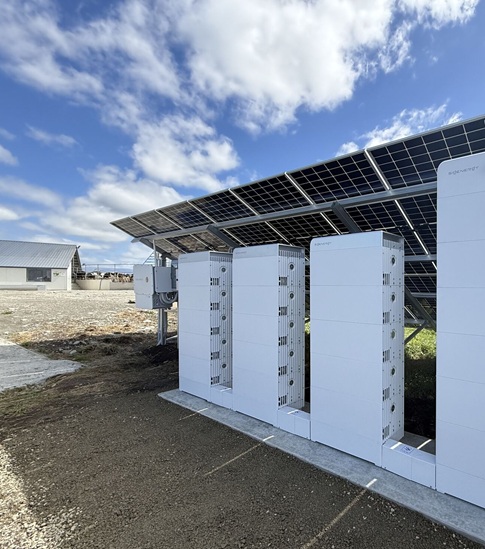
Location New Zealand, Oceania System Capacity 579 KWp Product Applied Single Pillar Ground Mount Grid Connection June 2026 Project Overview The 579 kWp Single-Pillar Ground-Mount Solar Project in New Zealand is an efficient, utility-scale solution designed to maximize land productivity while adhering to stringent local structural and electrical standards. By utilizing a "Steel Column + Steel Purlin + Aluminum Rail" architecture, this project balances high durability with the flexibility needed for New Zealand’s diverse terrain and wind conditions. The Challenge High Wind Loading: New Zealand’s geography often subjects structures to intense wind forces. Solar arrays, particularly large-scale ones, must be engineered to comply with AS/NZS 1170.2 standards. The single-pillar design is inherently more sensitive to torsional (twisting) forces than multi-post systems. If the structure's natural frequency aligns with vortex-shedding frequencies, it can lead to resonant excitation, which may cause joint failures or structural fatigue over time. Variable Soil Conditions: New Zealand’s diverse soil types (ranging from volcanic ash and soft clays to rocky substrates) pose a direct challenge to foundation stability. Maintenance of Moving/Joint Parts: Single-pillar systems rely heavily on the integrity of their connection points. Common issues include loose fasteners caused by vibration or thermal expansion. Regular torque inspections are essential to prevent joint failures that could lead to module displacement. Our Solution To successfully implement a 579 kWp single-pillar ground-mount project in New Zealand, our solution integrates high-strength materials, advanced structural engineering, and strict compliance with local standards. We utilize hot-dip galvanized carbon steel for the primary columns and purlins. This provides the necessary stiffness to resist twisting and lateral shear loads caused by high-velocity winds. All carbon steel components are hot-dip galvanized (ISO 1461) to provide a long-term sacrificial zinc layer. Rails use high-quality anodized aluminum for superior resistance to salt-air and moisture. The Result & Impact Performance Boost Single-axis trackers typically increase annual energy production by 25% to 35% compared to fixed-tilt systems. In Mexico’s high-irradiance environment, this results in superior electricity generation. Carbon Footprint Reduction This project directly displaces fossil-fuel-generated power (often imported natural gas), contributing to corporate ESG goals and Mexico’s broader transition toward clean electricity.
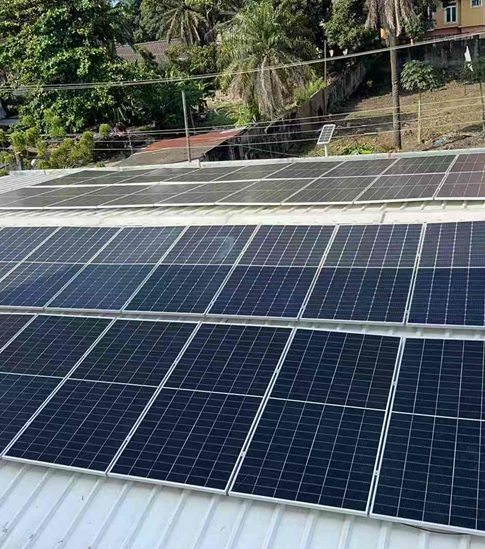
Location Nigeria, Africa System Capacity 440 KWp Product Applied L foot kit with long rails Grid Connection June 2026 Project Overview This project overview outlines a 440 kWp solar PV installation designed for a trapezoidal metal roof in Nigeria. Given the scale and the specific environmental conditions in the region, this installation prioritizes structural integrity, long-term durability, and optimized energy yield. The Challenge Roof Integrity and Load Bearing: Trapezoidal metal roofs require precise mounting. A common failure is installing mounting components in the "valley" (the low point) instead of the "crest" (the high point) of the roof rib. Valley mounting is prone to water pooling and leaks, which can lead to structural rot or corrosion. Waterproofing and Sealing: Every L-foot penetration represents a potential leak point. In Nigeria's rainy climate, improper sealing—such as failing to use high-quality EPDM gaskets or over-tightening screws—can lead to long-term water damage that compromises the entire building's interior. Wind Uplift: Solar arrays on trapezoidal roofs act as large "sails." If the L-foot anchors are not secured directly into the underlying structural purlins (rather than just the thin metal sheet), high-velocity wind gusts common in Nigeria can rip the panels and mounting rails from the roof. Our Solution To ensure your 440 kWp installation in Nigeria is resilient, efficient, and long-lasting, our solution centers on a high-grade L-Foot and Long Rail mounting system specifically engineered for trapezoidal metal roofs. By emphasizing structural precision and environmental protection, this approach mitigates the risks associated with Nigeria’s tropical climate. We strictly adhere to crest-mounting (fixing to the high point of the roof rib) rather than valley-mounting. The use of long aluminum rails provides a continuous, stable foundation that is superior to point-load systems. The Result & Impact Significant Cost Reduction Industrial facilities in Nigeria frequently struggle with high diesel costs and unreliable grid power. Transitioning to solar energy can cut monthly electricity expenses by up to 70%, allowing businesses to redirect these savings toward expansion, staff development, or improved services. Enhanced Financial and Environmental Profile Beyond immediate operational savings, solar adoption improves a company's corporate social responsibility (CSR) profile and can increase the overall property value. Furthermore, businesses can capitalize on government incentives, such as import duty exemptions on solar components, to shorten the return on investment (ROI) period, typically achieving full recovery within 3 to 5 years.
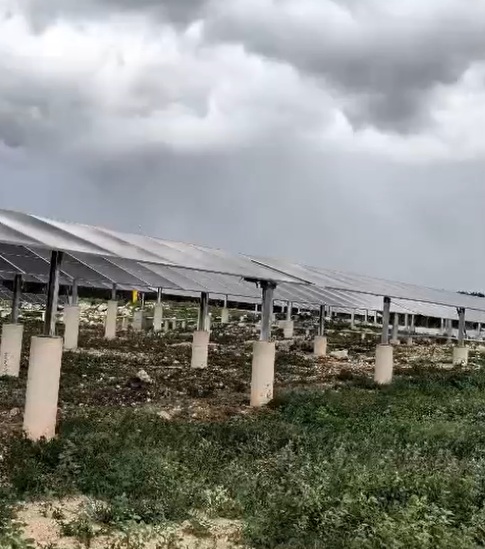
Location Mexico, North America System Capacity 1.3 MWp Product Applied Independent Single Axis Tracker Grid Connection June 2026 Project Overview A 1.3 MWp (Megawatt-peak) single-axis solar tracker project in Mexico represents a mid-sized utility or industrial-scale renewable energy installation. While 1.3 MWp is considered a smaller capacity compared to massive 100+ MW utility plants, it is a significant size for industrial self-generation or "distributed generation" projects in the Mexican market. The Challenge Wind and Structural Risks: High-velocity wind gusts can cause "galloping" or torsional instability in tracker rows. Unlike fixed-tilt systems, trackers require advanced wind-stow strategies. Relying on active sensors and grid power for stowing can lead to energy losses or failures; passive mechanical stow technologies are increasingly used to mitigate these risks. Terrain Constraints: Trackers generally require flat land for optimal performance. While Mexico has vast solar resources, uneven or sloped terrain requires custom foundations and site preparation, which can increase upfront installation costs by 10%–20%. Operational Maintenance: Trackers have moving parts (motors, bearings, gears) that are subject to wear. In dusty or high-heat regions of Mexico, this necessitates a more rigorous and costly O&M schedule compared to fixed-tilt installations to ensure the expected 25-year lifespan. Our Solution We supplied our advanced Independent Single Axis Solar Tracking System, perfectly tailored for this challenging environment. To address the uneven terrain, our tracking system utilized a highly adaptable articulated driveline and adjustable foundations, entirely eliminating the need for expensive earthworks. For maximum stability against winds in Gulf of Mexico, the torque tubes and mounting brackets were secured using our heavy-duty, hot-dip galvanized carbon steel U-bolts and foundation anchors. Furthermore, the system is equipped with an AI-driven backtracking algorithm to prevent row-to-row shading during early morning and late afternoon hours. The Result & Impact Performance Boost Single-axis trackers typically increase annual energy production by 25% to 35% compared to fixed-tilt systems. In Mexico’s high-irradiance environment, this results in superior electricity generation per square meter. Carbon Footprint Reduction This project directly displaces fossil-fuel-generated power (often imported natural gas), contributing to corporate ESG goals and Mexico’s broader transition toward clean electricity.
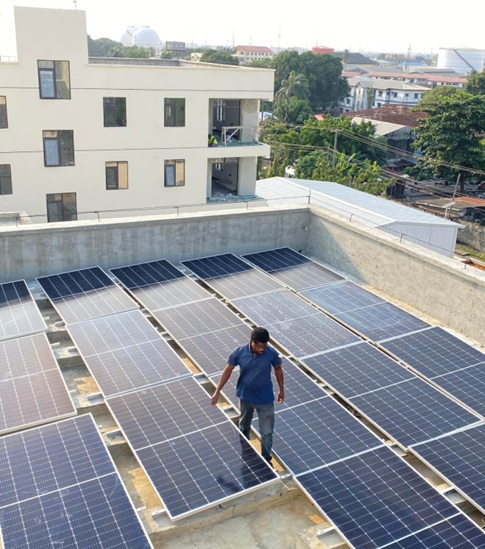
Location Nigeria, Africa System Capacity 80 KWp Product Applied Aluminum triangle bracket Grid Connection Jan 2026 Project Overview This 80 kWp Flat Roof Solar Project in Nigeria utilizes a robust triangular mounting structure anchored to custom concrete ballasted blocks. This solution is specifically designed to provide structural stability and long-term durability for commercial or industrial rooftops, ensuring high energy yield while protecting the building's integrity. The Challenge Maintaining Roof Waterproofing and Integrity: Using concrete blocks is an excellent solution for preventing roof penetrations, but the blocks themselves can cause issues if they aren't properly managed. They can trap water underneath, causing stagnant pools that lead to surface degradation. Furthermore, the vibration of the structure during high winds can cause the blocks to abrade the roof’s waterproofing membrane (e.g., bitumen or EPDM), leading to long-term roof damage. Managing Roof Obstructions: Rooftops often feature HVAC units, drainage pipes, vents, and fire escape paths. The challenge is to optimize the layout of the 80 kWp system to maximize the number of modules while ensuring that wind flow is not obstructed by these obstacles (which can create dangerous wind vortices) and maintaining access for roof maintenance. Managing Wind Uplift and "Sail" Effects: Since the solar array acts as a large, flat "sail," the wind force can be immense. The system must have sufficient "ballast" (the weight of the concrete blocks) to prevent the entire array from shifting or lifting during a storm. However, too much weight could exceed the maximum allowable dead load of the building's roof structure. Balancing these two extremes—enough weight to stay safe, but light enough to stay within structural limits—is the primary engineering hurdle. Our Solution To address the site-specific challenges of the 80 kWp Nigerian rooftop project, we have implemented a high-performance Landscape-Orientation Triangular Mounting Solution. This approach optimizes structural stability while maximizing the power output of every square meter of roof space. Each individual solar module is supported by two independent, high-grade aluminum alloy triangular frames. The Result & Impact Optimal Capture The landscape configuration allows for a wider array span, which optimizes the panel tilt and minimizes inter-row shading. This ensures that the 80 kWp system captures the maximum possible sunlight, translating into higher daily kWh production. Ease of Access The landscape grid creates clear, safe pathways for maintenance personnel to navigate the roof. Cleaning the panels—a critical task in Nigeria’s dusty regions—becomes significantly easier, helping to maintain high energy output levels without the risk of damaging the rooftop or the mounting structure.
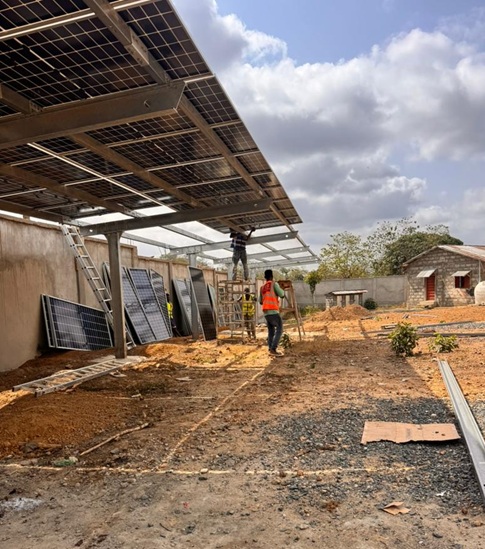
Location Sierra Leone, Africa System Capacity 270 KWp Product Applied Steel solar carport Grid Connection May 2026 Project Overview This 270 kWp Steel Solar Carport Project in Sierra Leone is a landmark infrastructure initiative. By converting expansive, sun-exposed parking areas into a high-capacity power generation plant, the project provides a dual-purpose solution: critical vehicle protection and a reliable, decentralized source of renewable energy for local facilities. The Challenge Managing Tropical Precipitation and Humidity: Unlike projects in arid climates, the structure must handle massive, sudden water volumes. Any poor drainage design leads to water ponding on the canopy, which adds significant weight and can trigger premature rust at connection points due to constant moisture exposure. The "leaking" of water onto vehicles below must also be prevented to maintain the facility’s utility. Corrosion in a Coastal-Humid Climate: Protecting the steel structure from corrosion throughout its 25-year lifespan. Standard paint finishes will fail quickly; the challenge is to ensure that the protective zinc coating is uniform and that every bolt, nut, and weld—if any—is shielded against "rust-creep." Foundation Stability in Tropical Soils: Designing a foundation system that provides enough bearing capacity to hold a 270 kWp array—which experiences massive wind uplift forces—without requiring excessively deep or complex concrete excavations that could disrupt the facility’s existing parking operations. Our Solution To address the structural and environmental challenges of the 270 kWp Nigerian carport project, we provide a professional-grade Single-Pillar Carbon Steel Solar Carport Solution. This system is specifically engineered to handle high wind loads while maintaining the architectural elegance of a cantilever design. Our design utilizes high-strength carbon steel as the primary structural material, treated with advanced finishing processes to ensure durability in local diverse climate. The Result & Impact Grid Stability & Reliability With a 270 kWp capacity, the system acts as a reliable power anchor for the host facility. It drastically reduces dependence on the national grid and minimizes the need for costly, carbon-intensive diesel backup generators, significantly lowering operational expenditures. A Scalable Blueprint As the first of its scale, this 270 kWp project establishes a high-performance standard that can be replicated or expanded. The design’s modular nature allows the facility to add more capacity as energy demands increase, ensuring that the infrastructure remains an evolving asset that grows alongside the organization’s success.
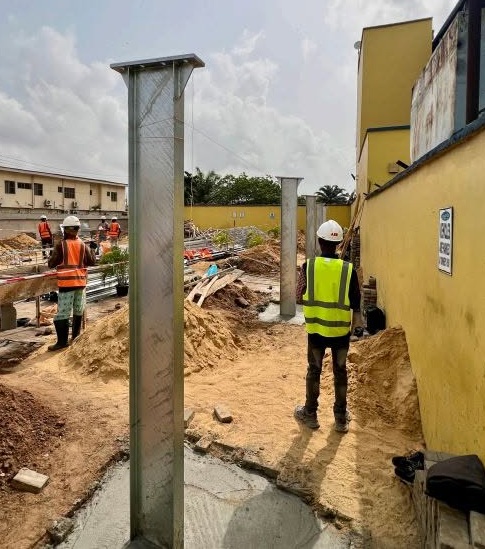
Location Nigeria, Africa System Capacity 180 KWp Product Applied Steel solar carport Grid Connection March 2026 Project Overview This 180 kWp Single Pillar Steel Solar Carport Project in Nigeria represents a high-impact infrastructure investment that transforms underutilized parking space into a dual-purpose asset: providing reliable vehicle shelter while generating significant clean energy. The Challenge Optimized Maneuverability and Safety: Engineering a column that is strong enough to support 180 kWp of panels while remaining "slender" enough to prevent collisions with vehicles. The design must provide a wide turning radius for SUVs and commercial trucks while ensuring that the "swing" of the canopy does not interfere with standard parking requirements. Foundation Geotechnics: Conducting thorough geotechnical surveys to ensure the underlying soil can handle the intense point-load of a single-pillar design. If the sub-base is unstable, the cantilevered arms can begin to sag over time, leading to potential structural failure or damage to the solar modules. Logistics and Assembly Precision: Coordinating the delivery and installation of heavy steel beams and large-format solar modules in a parking lot without completely shutting down the client's operations. The logistics require "just-in-time" installation sequences to minimize disruption to the facility’s daily business. Our Solution To address the structural and environmental challenges of the 180 kWp Nigerian carport project, we provide a professional-grade Single-Pillar Carbon Steel Solar Carport Solution. This system is specifically engineered to handle high wind loads while maintaining the architectural elegance of a cantilever design. Our design utilizes high-strength carbon steel as the primary structural material, treated with advanced finishing processes to ensure durability in Nigeria's diverse climate. The Result & Impact Operating Cost Reduction By generating power at the point of use, the facility owner achieves substantial savings on electricity bills and reduces reliance on expensive, high-maintenance diesel generators, directly improving the project’s internal rate of return (IRR). Optimized User Experience The single-pillar cantilever design maximizes parking space and vehicle maneuverability. This "clean-look" layout improves facility traffic flow and elevates the corporate image, signaling a commitment to innovation and environmental stewardship.
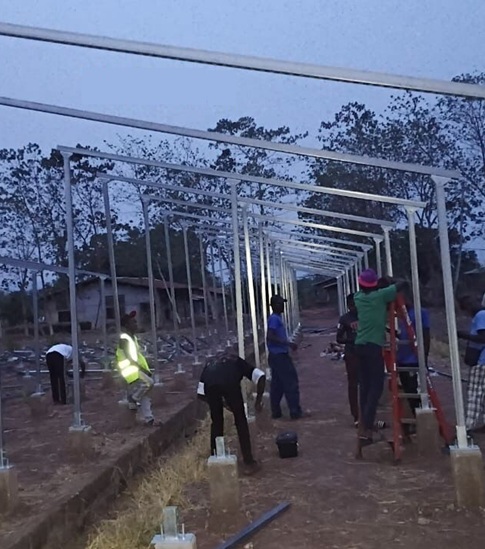
Location Benin, Africa System Capacity 99 KWp Product Applied Agri-PV Mounting System Grid Connection April 2026 Project Overview The Benin 99 kWp Agri-PV Project represents a pioneering sustainable development initiative that integrates solar energy generation with modern agricultural practices. By installing a 99 kWp photovoltaic system above productive farmland, this project dual-purposes the land to maximize efficiency: generating clean, renewable energy while providing essential shade and powered infrastructure to support local farming operations. The Challenge Soil Salinity and Corrosivity: Benin’s climate, particularly in southern regions, can be humid and prone to corrosive environmental factors. Protecting the galvanized steel mounting structures—especially at the weld points—from rapid oxidation is critical to ensuring the 25-year structural integrity of the solar array. Environmental Micro-climate Calibration: The core challenge of Agri-PV is finding the perfect balance between Light Transmissivity and Crop Photosynthesis. The mounting structure must be high enough to allow for proper airflow and machinery maneuverability, while the layout must ensure that the "shading pattern" of the panels does not negatively impact the specific crop types being cultivated beneath them. Grid Reliability and Power Management: In rural Benin, the project often operates as an Off-Grid or Micro-Grid system. Managing the intermittency of solar energy to ensure a constant power supply for high-demand agricultural tasks—such as water pumping for irrigation—requires sophisticated battery storage integration and load-management controls that can withstand high ambient temperatures. Our Solution The Unistrut-style channel system acts as the backbone of our Agri-PV project, providing a modular framework that adapts perfectly to the unique requirements of combining crop cultivation with solar energy generation. Agri-PV requires "dynamic geometry." As crops grow or seasons change, the structural spacing may need adjustment. Since our system utilizes pre-galvanized or stainless steel channel components, it is manufactured with high-quality factory-applied coatings. The Result & Impact Synergistic Resource Efficiency (Water–Energy–Food Nexus) The solar array provides essential shade that reduces plant heat stress and soil water evaporation. This creates a more favorable environment for crops, often leading to increased yields, particularly for heat-sensitive varieties. Scalability and Future-Proofing The project serves as a scalable blueprint. As energy or agricultural demands grow, the Unistrut-based infrastructure can be easily expanded or reconfigured to accommodate new crops or additional solar capacity without necessitating a complete system overhaul.
leave a message
Scan to Wechat :

Scan to WhatsApp :