Unlocking Solar Efficiency: A Guide to Solar Trackers
Jul, 21 2026
Solar panels perform best when facing the sun head-on. This raises a common dilemma: why aren't all solar arrays mounted on motorized systems that follow the sun's path?
The short answer is cost and space. For residential use, tracking systems seldom deliver a strong enough return on investment, making a fixed rooftop setup the smartest choice for most homes. Even so, solar trackers have distinct applications where they truly shine.
Defining Sun-Tracking Solar Panels
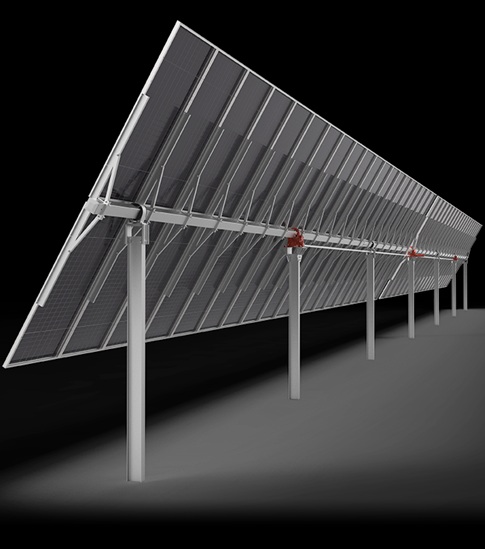
Sun-tracking panels—also referred to as solar trackers or rotating arrays—utilize motorized hardware to produce clean thermal and electric power.
Electricity output rises with direct sunlight exposure. In the Northern Hemisphere, south-facing panels naturally capture the most daylight hours. Sun-tracking technology eliminates guesswork by keeping panels at a perpetual right angle to the sun through continuous, automated rotation.
Mechanism: Single-Axis vs. Dual-Axis Trackers
Solar trackers complete a daily cycle using one of two primary configurations:
Single-Axis Systems: These operate like a seesaw, pivoting along a single axis to track the sun from east to west daily.
Dual-Axis Systems: These offer complete freedom of movement, tilting both east-west and north-south to match the sun's precise position across different seasons and times of day.
Depending on system software and hardware, trackers can run entirely on autopilot or allow manual user control.
Fixed vs. Tracking Systems: Which Wins?
For most residential homeowners, fixed systems provide the most practical and economical solution. A well-exposed roof easily produces enough energy to offset typical utility bills. Because utility providers often cap net-metering capacities, generating excess power beyond historical consumption offers little financial advantage.
Fixed rooftop solar remains the industry standard for cost-efficiency. Professional installers design these systems around your roof's unique space, pitch, and orientation. However, for utility-scale solar farms and massive commercial operations, the boost in energy production easily offsets the steeper price tag of trackers.
The Major Benefits of Trackers
Because solar efficiency peaks under direct sunlight, a tracker's core advantage is maximum power generation, allowing users to capture every possible kilowatt-hour of daylight.
Research from 2022 indicates that tracking systems yield 10% to 60% more energy than fixed arrays. While performance depends on location and tracker type, industry consensus places the average annual boost between 30% and 40%.
Why Solar Trackers Aren't Ideal for Homes
Despite their high output, trackers carry significant downsides that limit their viability for residential properties:
1. Steep Upfront Investment
Trackers require extra hardware, including motors, gears, and elevated mounting structures to clear space for full rotation. This drives up initial project costs and lengthens the payback period, rarely yielding enough financial gain for an individual homeowner to offset the expense.
2. Demanding Site Conditions
To make financial sense, a tracker needs uninterrupted, 360-degree sunlight throughout the entire day. Shading from trees or neighboring buildings creates major hurdles. Furthermore, because local building and electrical codes frequently prohibit elevating rotating systems above slanted roofs, trackers are restricted almost entirely to ground mounts or flat commercial roofs.
3. More Moving Parts, More Maintenance
A major advantage of standard solar energy is its passive, low-maintenance design. Sun-tracking systems, however, introduce mechanical complexity. Because they rely on moving parts, rotating panels generally require more frequent upkeep than stationary setups.
Pros and Cons at a Glance
Pros: Significantly higher electricity production.
Cons: Higher upfront costs, stricter property requirements, and increased maintenance due to moving parts.
Is Solar Tracking Worth It?
Ultimately, while sun-tracking systems deliver higher energy yields, they rarely make sense for residential installations.
Because most homes have sufficient roof space to meet their energy needs cost-effectively with fixed panels, tracking systems are best left to large-scale operations. Today, the ideal applications for solar trackers include:
Community solar farms
Commercial solar projects
Utility-scale power generation
Are you preparing for a utility-scale solar project? We provide technical consulting and structural support to ensure your assets are built on a solid foundation.
Ready to start your next project? Contact us at: fred@sunnect-solar.com