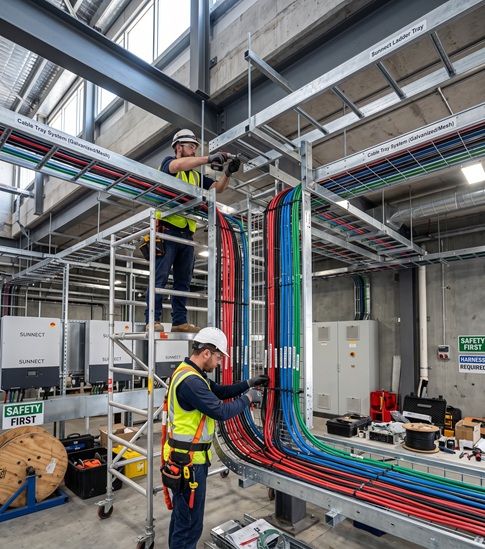
Cable Trays in Solar PV Systems: Functions and Importance
Aug, 24 2026
While solar modules and inverters often steal the spotlight, cable management systems are the unsung heroes of photovoltaic (PV) projects. Cable trays protect, guide, and support PV cables, directly impacting electrical safety, system reliability, and long-term maintenance efficiency. Without them, even top-tier solar arrays risk severe electrical faults.
Here is a streamlined, professional rewrite of your article for maximum impact and readability.
Core Types of Cable Trays
Selecting the appropriate tray structure depends on your project’s environment, thermal requirements, and routing complexity:
Ladder Type: Provides superior heat dissipation; the standard choice for large ground-mounted plants running high-current DC cables.
Perforated: Balances robust support with partial protection against falling objects; ideal for commercial rooftop flexibility.
Wire Mesh: Lightweight and highly adaptable for complex cable routes, though it offers less mechanical protection than solid alternatives.
Solid Bottom: Delivers maximum protection against debris, moisture, and chemical exposure for specialized industrial applications.
Material Selection Guide
Choosing the correct material prevents premature corrosion and costly replacements.
Material
Key Characteristics
Best Applications
Hot-Dip Galvanized Steel
High strength, economical, durable
Large-scale ground-mounted plants
Aluminum Alloy
Lightweight, natural corrosion resistance
Rooftops, coastal installations
Stainless Steel (304/316)
Superior corrosion and chemical resistance
High-humidity, saline, or floating PV
Essential Design & Installation Practices
To ensure system longevity and safety, strict adherence to installation best practices is non-negotiable:
Structural Integrity: Account for wind and snow loads, ensuring support spacing (typically 1.5 to 3 meters) prevents cable sagging and connection stress.
Strategic Separation: Physically isolate DC arrays, AC grid cables, and communication lines to eliminate electromagnetic interference.
Thermal Flexibility: Incorporate expansion joints on long runs to accommodate thermal expansion, contraction, and uneven ground contours.
Grounding & Bonding: Properly ground all tray sections to create an equipotential system, providing a safe path for fault currents and mitigating shock hazards.
Note: The most common design pitfalls include ignoring wind loads in open areas, mixing AC/DC cables without proper separation, and neglecting future maintenance access routes.
Integrated Solutions by Sunnect Solar
Whether integrating with front pillars on ground mounts, navigating delicate roof waterproofing membranes, or adapting to floating PV wave movements, properly engineered cable trays slash maintenance times and elevate safety.
Sunnect Solar provides tailored, integrated mounting and cable management solutions—from heavy-duty ground systems to corrosion-resistant rooftop setups. By aligning the support network of your modules with your cabling infrastructure, we help build safer, more efficient, and highly reliable solar power systems.
Are you preparing for a solar project?
We provide technical consulting and structural support to ensure your assets are built on a solid foundation.
Contact us at: fred@sunnect-solar.com