other
  • The Role of Geotechnical Surveys in Solar Farm Success
    The Role of Geotechnical Surveys in Solar Farm Success
    May, 06 2026
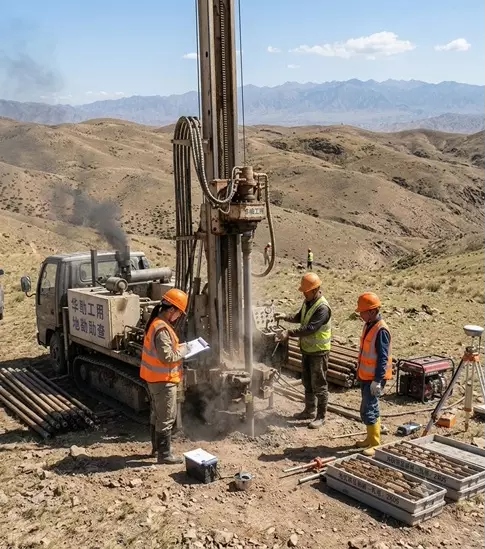
    As countries worldwide accelerate their transition toward net-zero milestones, the landscape of the global energy sector is being reshaped by the rapid deployment of utility-scale solar farms. While the industry’s spotlight often falls on high-performance module efficiency, advanced inverter technology, or the complexities of grid capacity and planning consents, the long-term viability and bankability of any ground-mounted PV asset ultimately hinge on one foundational factor: the unseen conditions beneath the surface. A high-quality geotechnical survey acts as the essential bridge between unknown subterranean variables and reliable, evidence-based engineering. By accurately assessing soil behavior, these investigations do more than just fulfill a permitting requirement; they inform the fundamental structural design, actively mitigate construction risks, and provide the financial certainty that developers, EPC contractors, and institutional investors demand. For projects utilizing sophisticated ground-mounted tracking systems or robust fixed-tilt structures, a geotechnical investigation is far from a preliminary formality. It is a strategic imperative that dictates structural integrity, deployment efficiency, cost control, and the multi-decade performance of the asset. 1. Optimizing Foundation Design and Material Efficiency Ground-mounted solar arrays function as massive structural skeletons that rely entirely on driven steel piles or ground screws to safely transfer static and dynamic loads into the earth. The performance of these foundations is not a product of the steel itself, but of the interaction between the metal and the soil—governed by shear strength, skin friction, and bearing capacity. A comprehensive geotechnical survey provides the empirical data required to calculate precise embedment depths, lateral resistance, and axial capacity. Without this verified subsurface data, engineers are forced to operate under conservative, "worst-case scenario" assumptions. Over-engineering by just a few percent across a project consisting of thousands of piles leads to vastly inflated steel volumes and prolonged pile-driving refusal times. This unnecessarily drives up procurement and labor costs. Conversely, underestimating soil reactivity—such as failing to account for expansive clays or liquefaction potential—can trigger settlement, tracking misalignment, or even catastrophic structural failure. Precise geotechnical data eliminates this guesswork, allowing for optimized, lean, and cost-efficient foundation engineering that respects the project's bottom line. 2. Mitigating Construction Risk and Preventing Refusal Delays Subsurface anomalies represent one of the most volatile variables in solar farm construction. Unanticipated rocky strata, high water tables, or subterranean voids can lead to pile refusal, sudden equipment damage, and cascading project delays. Disruptions of this scale not only inflate labor and machinery costs but can also jeopardize strict grid-connection deadlines and the projected revenue timelines tied to power purchase agreements. Early-stage geotechnical probing allows contractors to select the appropriate ramming machinery, plan pre-drilling strategies if necessary, and optimize on-site logistics before a single pile is driven. This proactive, data-driven approach keeps civil works on schedule and prevents the "change order chaos" that often erupts when a contractor encounters unexpected ground conditions halfway through the installation phase. 3. Safeguarding Long-Term Structural Integrity Solar farms are long-term infrastructural assets designed to operate reliably for 25 to 30 years with minimal structural intervention. Even minor differential settlement—where the ground shifts unevenly under the array—can compromise solar panel alignment. This misalignment alters load distributions, puts unnecessary stress on delicate tracking actuators, and ultimately degrades energy yield. A robust geotechnical evaluation assesses settlement potential, slope stability, and groundwater fluctuations. This ensures that the mounting structures are anchored with the precise stability required to withstand extreme wind loads (which can be amplified by tracking systems) and heavy snow loads over their full design life. By ensuring the "feet" of the system are secure, you reduce ongoing operations and maintenance (O&M) overheads significantly. 4. Enhancing Cost Certainty and Investor Assurance In the competitive utility-scale solar market, margins are tightly calculated around the Levelized Cost of Energy (LCOE). Unexpected civil engineering re-designs due to poor soil data can rapidly erode project profitability and spook equity partners. Front-end geotechnical drilling provides developers with complete clarity on material requirements and installation methodologies from day one. This transparency enables accurate EPC pricing, slashes the need for bloated contingency budgeting, and solidifies the assumptions used in financial modeling. Across utility-scale portfolios, the initial capital expenditure (CAPEX) of a thorough soil investigation is negligible—often less than 0.1% of the total project value—compared to the catastrophic financial impact of unforeseen ground failures or redesigns. 5. Combating Subsurface Corrosion and Degradation The longevity of a solar plant relies not only on mechanical stability but also on the chemical stability of its subterranean assets. Geotechnical surveys analyze critical chemical and physical soil properties, including electrical resistivity, pH levels, moisture content, and the presence of aggressive ions like chlorides and sulfates. This data directly informs corrosion mitigation strategies. For instance, it allows engineers to specify the required thickness of hot-dip galvanized sacrificial zinc coatings for steel piles or the specific grades of concrete for ballasted elements. By identifying "corrosive" soils early, developers can implement the correct protection, safeguarding the structural backbone of the array for its entire operational lifecycle and preventing the hidden cost of premature corrosion-related asset failure. Engineering Clarity from the Ground Up While high-efficiency photovoltaic modules may represent the "face" of solar innovation, the commercial resilience of an installation is rooted firmly in the ground. Without definitive subsurface insight, even the most advanced solar technology remains exposed to avoidable structural and financial risk. An early, thorough ground investigation strengthens every phase of asset delivery—from optimized structural engineering to investor due diligence. It is not merely a compliance checkbox for local authorities; it is a vital risk-mitigation tool that protects margins, timelines, and asset longevity. In the race to net-zero, those who understand their ground the best will be the ones who build the most successful, durable, and profitable solar energy assets. Are you preparing for a utility-scale solar project? We provide technical consulting and structural support to ensure your assets are built on a solid foundation. Ready to start your next project? Contact us at: fred@sunnect-solar.com
  • From Parking Lots to Power Plants: Unlocking the Value of Solar Carports
    From Parking Lots to Power Plants: Unlocking the Value of Solar Carports
    Jul, 01 2026
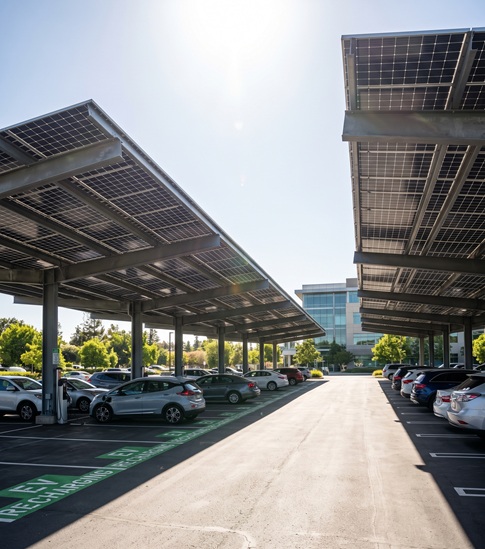
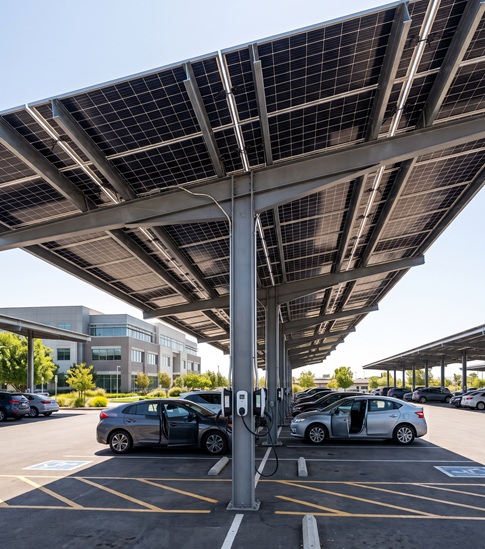
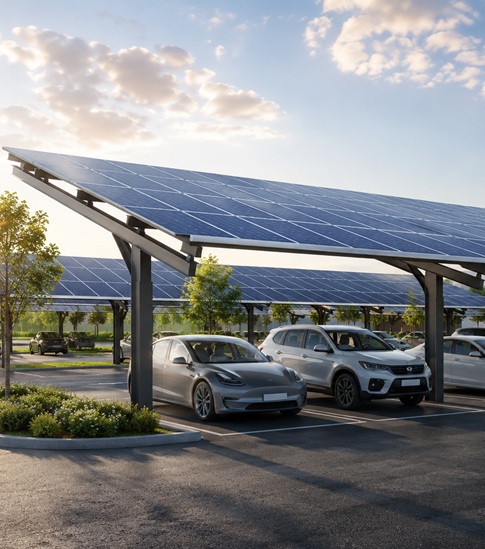
    For decades, the commercial car park has been viewed as a functional necessity—a vast, grey expanse of asphalt dedicated solely to vehicle storage. While these footprints occupy some of the most valuable real estate in a company’s portfolio, they have traditionally sat idle, generating no intrinsic value while contributing to the "urban heat island" effect. Today, that narrative is shifting. Organizations worldwide are now transforming these underutilized spaces into high-performance, revenue-generating clean energy assets through the integration of advanced Solar Photovoltaic (PV) Canopies. By turning a parking lot into a solar power plant, you are doing more than just installing equipment; you are evolving your infrastructure to meet the demands of a decarbonizing economy. 1. Power on Demand: Energy Independence at the Source The most immediate benefit of a solar carport is the ability to generate clean, renewable electricity exactly where it is consumed. Unlike remote solar farms or large-scale rooftop installations that may be constrained by roof integrity, shading, or structural weight limits, solar carports offer unmatched flexibility. By generating power on-site, organizations can significantly offset their energy bills, reducing reliance on the volatile, traditional electricity grid. This is particularly crucial as energy prices continue to fluctuate. With a solar carport, your parking lot becomes a decentralized energy hub. The electricity generated during peak daylight hours can power your facility’s operations, offset cooling loads during hot months, and, when paired with energy storage, provide power long after the sun goes down. This transition from being a passive energy consumer to an active energy producer is a hallmark of modern, resilient business operations. 2. A Masterclass in Efficiency: Zero-Land Decarbonization One of the greatest challenges in the push for Net-Zero is land acquisition. Building massive solar arrays often requires diverting land from other uses, which can be both expensive and environmentally contentious. Solar carports solve this by utilizing space that is already "disturbed" and dedicated to human activity. They require no extra land acquisition, allowing you to hit your ESG (Environmental, Social, and Governance) targets by maximizing the space you already own. This "infrastructure multitasking"—where the same square footage provides both parking and energy generation—is the gold standard for efficient commercial development. It allows companies to scale their renewable energy footprint without sacrificing any existing functionality. 3. Future-Proofing with EV Integration The shift toward electric vehicles (EVs) is no longer a trend; it is a global transformation. As EV adoption increases, your customers, employees, and fleet managers will expect reliable, high-speed charging infrastructure. Integrating EV chargers into your solar carport structure is a "strategic win" that multiplies your investment. By charging EVs directly with solar-generated electricity, you lower the operational costs of your charging network while signaling to your stakeholders that your brand is innovative and future-ready. Furthermore, the combination of solar and EV charging can be bundled into a single construction project, streamlining permitting, trenching, and utility interconnection. This approach saves significant time and capital compared to retrofitting chargers later, value-engineering the process to deliver immediate ROI. 4. An Upgraded Customer Experience: Protection and Comfort A solar carport is more than just a mounting system; it is a premium amenity. In many climates, the "parking experience" is a major pain point for employees and customers alike. Vehicles left in open lots are exposed to blistering UV rays in the summer, torrential rain, and snow in the winter. A solar canopy provides immediate, tangible relief. By keeping vehicles shaded and cool, you significantly reduce the need for air conditioning upon startup, which saves fuel and improves local air quality. For employees, this protection improves daily satisfaction and workplace comfort. For retail customers, shaded parking can even act as a competitive differentiator, encouraging longer visit times during hot weather. It transforms a mundane parking lot into a sheltered, comfortable environment, directly enhancing your facility’s appeal and boosting brand sentiment. 5. Engineered for Durability and Performance Modern solar carport structures are built for the rigors of high-traffic environments. We move far beyond the "steel monsters" of the past; today’s designs are modular, aesthetically pleasing, and highly durable. Available in versatile single-row, double-row, and long-span configurations, these structures are engineered to optimize solar exposure, maximize traffic flow, and ensure ease of vehicle clearance for everything from compact sedans to heavy-duty delivery fleets. These systems are built to withstand extreme weather, from hurricane-force winds to heavy snowfall, utilizing high-grade materials like hot-dip galvanized steel and anodized aluminum. This durability ensures a 25+ year lifespan, providing a stable foundation for your company’s long-term decarbonization goals. 6. The Financial and Strategic Advantage Beyond the immediate utility, solar carports provide a compelling financial case. In many jurisdictions, businesses can leverage significant tax incentives, such as investment tax credits, and utilize accelerated depreciation to recover capital costs faster. Furthermore, as net-zero mandates become the regulatory norm across many regions, solar carports help improve your building’s EPC rating and overall market valuation. Properties equipped with renewable infrastructure consistently attract higher occupancy rates and command better lease values. They signal to investors and tenants that your property is a forward-thinking, resilient asset, rather than a depreciating liability. Why Partner with Us? Whether you operate a retail park, a corporate headquarters, a logistics hub, or a municipal estate, the parking lot is no longer just a place to leave a vehicle. It is your next great clean energy asset. At Sunnect Solar, we specialize in delivering turnkey, engineered solutions that combine high-efficiency solar generation with seamless charging integration. We don't just build structures; we build value, resilience, and sustainability into the heart of your property. Stop viewing your car park as just asphalt. Start viewing it as the powerhouse of your future operations. Ready to start your next project? Let’s discuss how we can turn your parking space into a revenue-generating, sustainable asset. Contact us at: fred@sunnect-solar.com
  • How to prevent rust at weld points on galvanized solar mounting structures
    How to prevent rust at weld points on galvanized solar mounting structures
    May, 06 2026
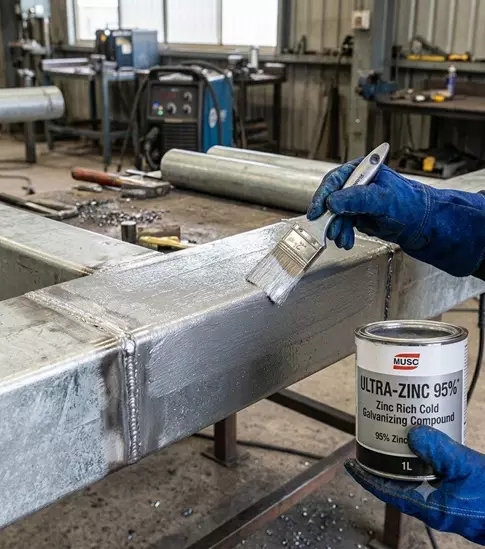
    This is a comprehensive guide to Corrosion Protection for Welded Galvanized Steel Structures. When galvanized steel is welded, the intense heat consumes the protective zinc layer, leaving the steel exposed to the atmosphere. If left untreated, these weld joints become the "weakest link," leading to premature structural failure. Technical Guide: Corrosion Protection for Welded Galvanized Steel Joints In industrial and solar mounting applications, galvanized square steel is a standard material choice. However, the welding process is inherently destructive to the protective zinc coating. To maintain a 25-year structural lifespan, you must implement a systematic post-weld restoration process. 1. Pre-Weld Preparation: The Foundation Effective corrosion prevention begins before the torch is lit. Localized Dezincification: Before welding, grind away the galvanized layer approximately 20–30 mm on both sides of the joint using an angle grinder or abrasive paper. The Logic: Health: Prevents the inhalation of toxic zinc fumes during welding. Weld Quality: Molten zinc can mix into the weld pool, causing porosity, brittleness, and cracking. Removing it ensures a clean, high-strength structural bond. 2. The Five-Step Post-Weld Restoration Strategy Restoring the protection is a precise, multi-layered chemical and mechanical process. Step 1: Cleaning and Decontamination Welding slag, spatter, and oxidation are highly corrosive and must be fully removed. Mechanical Removal: Use a wire brush or angle grinder to expose bright, clean metal. Solvent Degreasing: Wipe the area with alcohol or a professional metal cleaner. Residual oil or hand sweat can cause the paint to delaminate, rendering the repair useless. Step 2: Restoring Cathodic Protection (The Zinc Layer) This is the most critical step. You must restore the "sacrificial" protection that makes galvanized steel so effective. Cold Galvanizing Compound: Apply a high-quality cold-galvanizing paint with a zinc content of $\ge$ 92% in the dry film. Application: Apply 2–3 layers, allowing 30 minutes of flash-off time between coats. Unlike decorative silver paints, true cold galvanizing provides active cathodic protection, meaning the zinc will corrode instead of the steel. Step 3: Enhancing the Barrier (Epoxy Zinc-Rich Primer) Once the zinc layer has cured, apply an epoxy zinc-rich primer ($\ge$ 80% zinc content). This layer serves as a high-density chemical barrier that seals the weld and prevents moisture from reaching the base metal. Step 4: Weatherproof Topcoating The zinc-rich primer protects against rust, but it is often vulnerable to UV and mechanical wear. Acrylic Polyurethane Topcoat: Apply 1–2 coats of a UV-resistant topcoat. This provides a durable, chemical-resistant shield that protects the primer from environmental degradation. Aesthetics: Choose a finish—typically silver-gray—to ensure the repaired joint blends seamlessly with the rest of the structure. Step 5: Auxiliary Sealing (For Severe Environments) For structures in coastal, high-salinity, or underground environments, standard painting may be insufficient. Heat-Shrinkable Sleeves: For pipe joints, use a heat-shrinkable sleeve with hot-melt adhesive. This creates an airtight, physical seal that is impervious to moisture. Anti-Rust Wax: For intricate crevices or joints that cannot be easily painted, inject anti-rust wax. This displaces moisture and stays flexible, providing long-term protection in hard-to-reach areas. 3. Quality Assurance and Maintenance To guarantee a 25-year service life, you must manage the assets proactively. Environmental Adaptation: In "salt-fog" or high-humidity environments, increase the total Dry Film Thickness (DFT) and consider upgrading to high-performance fluorocarbon topcoats for superior chemical resistance. Routine Inspection: Treat weld joints as critical infrastructure. Inspect coatings every 1–2 years. If mechanical damage (scratches or chips) occurs, perform a "spot touch-up" immediately to prevent rust-creep under the remaining paint. Safety Standards: Always ensure workers wear proper respirators rated for metal fumes and use adequate ventilation, especially in confined spaces. Conclusion Post-weld rust prevention is not merely "touch-up painting"; it is the reconstruction of an electrochemical protection system. By strictly controlling surface preparation, applying high-zinc compounds, and sealing the joint with a weatherproof barrier, you ensure your project remains structurally sound and visually pristine for decades. Are you planning a project that requires long-term structural durability? We provide expert guidance on material selection and corrosion mitigation for solar, commercial, and industrial steel structures. Contact us at: fred@sunnect-solar.com

leave a message

leave a message
If you are interested in our products and want to know more details,please leave a message here,we will reply you as soon as we can.

Home

Products

whatsApp

Contact

leave a message
If you are interested in our products and want to know more details,please leave a message here,we will reply you as soon as we can.