other
  • Transforming the Urban Landscape: The Rise and Profound Impact of Solar Carports
    Transforming the Urban Landscape: The Rise and Profound Impact of Solar Carports
    Oct, 14 2026
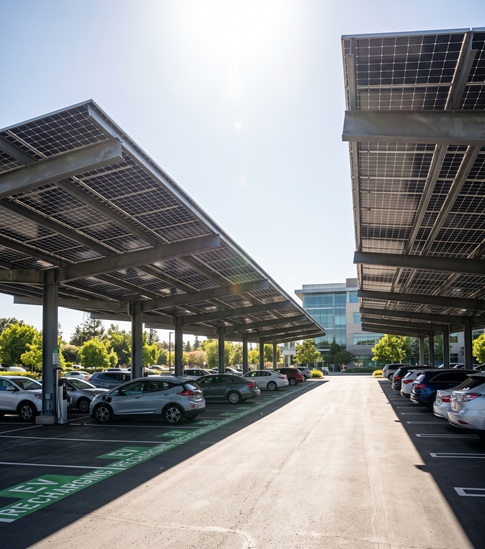
    Parking lots are an inescapable and ubiquitous staple of modern urban and suburban infrastructure. Whether wrapped around massive shopping malls, sprawling across corporate campuses, or lining municipal government centers, these vast stretches of asphalt are rarely recognized as prime real estate. In fact, they are often viewed as necessary eyesores that absorb heat and contribute to the urban heat island effect. However, with the rapid expansion of renewable energy technologies and a global push toward sustainability, a profound paradigm shift is underway. Solar carports are reimagining these dormant, single-use spaces as active, decentralized power stations. By generating clean electricity, slashing utility expenses, and providing valuable vehicle shelter, solar carports are pushing the boundaries of sustainable design. Here is a comprehensive look at how this innovative technology is reinventing the everyday parking space.   Understanding Solar Carports  A solar carport is essentially an elevated structural canopy outfitted with photovoltaic (PV) panels, purposefully built directly over existing parking areas. Unlike traditional rooftop arrays—which are limited by roof size, angle, and structural integrity—or ground-mounted solar farms that require vast tracts of undeveloped land, these structures offer a brilliant, dual-purpose solution. They are engineered from durable materials, such as high-grade structural steel, to withstand heavy winds and snow loads, all while being precisely angled to capture optimal sunlight. From sprawling commercial complexes to everyday residential driveways, they represent a highly versatile, scalable, and practical investment that seamlessly integrates into existing infrastructure without displacing natural habitats.   Core Advantages: 1. Optimizing Dormant Space and Preserving Land Expansive parking lots typically serve a single, passive function: temporary vehicle storage. In densely populated urban areas where land is at a premium, finding space for large-scale renewable energy projects is a significant logistical hurdle. Solar canopies activate these massive, underutilized footprints, transforming them into clean energy hubs without requiring the purchase, zoning, or development of additional land. This is particularly crucial for environmental conservation, as it prevents the clearing of forests or agricultural land that is often required for utility-scale solar farms. 2. Driving Clean Energy Production and Grid Resilience By converting abundant sunlight into usable electricity, these structures serve as vital allies in the global fight against climate change. They empower corporations, municipalities, and homeowners to significantly shrink their carbon footprints and pivot away from polluting fossil fuels. Beyond environmental stewardship, distributed energy generation via solar carports enhances local grid resilience. By producing power precisely where it is consumed—often during peak daylight hours when commercial energy demand is at its highest—carports alleviate strain on aging municipal power grids and reduce transmission losses. 3. Slashing Energy Expenses and Ensuring Financial Stability Power generated on-site translates directly to a dramatically reduced reliance on the traditional power grid and significantly lower monthly utility bills. Furthermore, solar carports act as a powerful financial hedge against the volatile and ever-increasing costs of traditional energy markets. Through net metering programs available in many regions, property owners can often sell surplus energy back to their local utility providers, turning a sunk infrastructure cost into a revenue-generating asset. With financing options like Power Purchase Agreements (PPAs), many organizations can even install these systems with zero upfront capital. 4. Shielding Vehicles and Elevating the User Experience Beyond the impressive metrics of energy production, carports act as protective architectural shields that offer immediate, tangible benefits to users. They safeguard cars from harsh environmental elements, including baking sun, heavy rain, hail, and snow. This protection helps preserve vehicle exteriors, but more importantly, it ensures a vastly superior and comfortable experience for drivers. During sweltering summer months, parking in the shade dramatically reduces cabin temperatures, minimizing the need for heavy air conditioning use upon startup, thereby saving fuel and reducing localized tailpipe emissions. 5. Powering the Electric Vehicle (EV) Revolution The integration of electric vehicle (EV) charging stations into solar carports is a natural and highly synergistic pairing. As the automotive industry transitions toward electrification, the availability of reliable charging infrastructure remains a hurdle. By fueling EVs with locally generated, 100% renewable energy right where people work or shop, organizations can accelerate the transition toward zero-emission transportation. This effectively eliminates the paradox of charging a "green" electric car with electricity generated by burning coal. Forward-looking installations are even exploring vehicle-to-grid (V2G) technologies, where plugged-in EVs can act as temporary energy storage.   Real-World Implementation and Corporate Leadership The adoption of solar carports is accelerating exponentially across multiple sectors, including retail centers, academic campuses, hospitals, sports stadiums, and corporate headquarters. Major Fortune 500 companies have championed this approach, powering their massive facilities while offering green charging solutions as a premium perk to staff and patrons. This visible commitment to sustainability goes beyond operational efficiency; it serves as a powerful branding tool that boosts Environmental, Social, and Governance (ESG) scores, attracts eco-conscious consumers, and aids in recruiting top-tier talent. Similarly, universities and local governments leverage these installations to cut long-term operational budgets while publicly showcasing their environmental commitments to their communities.   What Lies Ahead: The Future of Urban Energy  As photovoltaic technology improves—yielding higher efficiency panels, bifacial modules that capture reflected light from the pavement, and aesthetically pleasing transparent solar glass—solar carports will become a standard feature of modern urban planning. Coupled with advancements in on-site battery storage, businesses will soon be able to store the solar energy generated during the day to power facilities through the night. Bolstered by government incentives, tax credits, and continuously plummeting hardware costs, these structures will only become more financially compelling.   The Road Forward  Solar carports represent a monumental shift in renewable energy infrastructure, elegantly turning vast stretches of passive asphalt into highly valuable, power-generating assets. By capitalizing on these ubiquitous and underutilized areas, society can drive down soaring energy costs, champion genuine sustainability, and dramatically accelerate the green transition. Ultimately, investing in a solar carport is much more than just a savvy financial decision or a nod to corporate responsibility—it is a concrete, highly visible step toward building a cleaner, resilient, and self-sustaining future for our urban landscapes.   Are you preparing for a solar canopy project? We provide technical consulting and structural support to ensure your assets are built on a solid foundation.   Contact us at: fred@sunnect-solar.com    
  • The Core Benefits of Single-Post Solar Carport Structures
    The Core Benefits of Single-Post Solar Carport Structures
    Sep, 21 2026
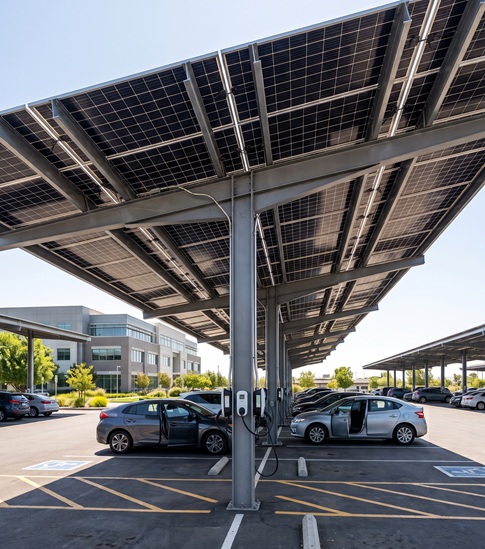
    As the world accelerates its transition toward renewable energy, city planners, commercial real estate developers, and business owners are increasingly asking the same question: How can we use our existing urban spaces more intelligently? Often, the most effective answer is hiding in plain sight—our everyday parking lots.   Traditional ground-mounted solar power plants require vast expanses of vacant land, which is a luxury in urban environments. Solar carports, however, offer an ingenious solution. They transform idle parking spaces into micro-power plants while simultaneously providing vehicles with much-needed protection from the elements.   Yet, the design of solar carports is constantly evolving. While the older, multi-post (or double-column) carports are structurally sound, they have historically introduced significant friction into the daily parking experience. Today, the Single-Post Solar Carport Structure is rapidly emerging as the premier choice for commercial properties, corporate campuses, and large-scale public facilities.   But what exactly makes the single-post structure stand out in a crowded market? In this comprehensive guide, we will dive deep into the core advantages of this innovative design and explore why it represents the future of commercial solar integration.   1. Ultimate Space Optimization: Delivering "Door-Opening Freedom" Anyone who owns or manages a parking facility knows that space is money, and user experience is paramount. Traditional multi-post solar carports often feature dense support columns positioned directly between adjacent parking spaces. This design significantly narrows the usable width of each spot, creating a claustrophobic experience for drivers. More importantly, it dramatically increases the risk of drivers and passengers banging their doors against steel columns or scratching their vehicles while maneuvering. The single-post structure—typically utilizing a T-frame, Y-frame, or cantilevered design—perfectly resolves this widespread pain point. By concentrating the core load-bearing columns either at the front of the parking spaces or along the central axis of back-to-back spots, it completely clears the side areas of any physical barriers. Obstacle-Free Access: Drivers and passengers can swing their doors wide open without gingerly trying to avoid a massive steel beam. This is especially crucial for modern vehicles, particularly larger SUVs and trucks. Reduced Accident Rates: The spacious entry and exit angles significantly lower the risk of low-speed collisions and scrapes when drivers are reversing into or pulling out of spots, ultimately reducing property damage disputes for facility managers.   2. Minimalist Aesthetics: Elevating Commercial and Brand Value In modern architectural design, the seamless unification of form and function is the ultimate goal. For high-end shopping centers, corporate headquarters, or state-of-the-art tech parks, installing a heavy, industrial "steel jungle" in the front parking lot can severely disrupt the aesthetic harmony of the property. Single-post solar carports break away from the bulky, utilitarian feel of traditional industrial equipment. With their streamlined, modern, and often cantilevered designs, they look more like contemporary urban sculptures than conventional power plants. This high-tech, clean appearance effortlessly blends into various architectural styles. Furthermore, it serves as a highly visible, physical manifestation of a company’s commitment to ESG (Environmental, Social, and Governance) principles. A sleek solar carport immediately signals to clients, employees, and investors that your brand is forward-thinking and dedicated to sustainable development.   3. Seamless Integration with EV Infrastructure and ADA Compliance With the rapid proliferation of Electric Vehicles (EVs), combining solar carports with EV charging stations is no longer a luxury—it is an industry standard. The single-post structure exhibits distinct, built-in advantages for this integration: All-in-One Charging Stations: The robust central support column serves as the perfect mounting point for EV charging hardware, wiring, and electrical components. Conduits and cables can be entirely hidden within the hollow interior of the post. This not only ensures electrical safety and protects wires from vandalism or weather damage but also eliminates the extra costs and footprint of building separate concrete bases for standalone chargers. Wheelchair and ADA Friendliness: Designing for accessibility is a legal and moral imperative. For disabled parking spaces requiring wheelchair ramps and wide access aisles (such as ADA-compliant spots in the US), multi-post structures often block necessary clearance. The single-post design leaves the side perimeters completely open, making the layout of fully compliant, accessible parking spots incredibly straightforward.   4. Streamlined Construction and Reduced Surface Disruption Retrofitting an existing asphalt or concrete parking lot with a solar carport comes with a major headache: foundation excavation. Traditional two-post or four-post structures require extensive digging, trenching, and concrete pouring across the entire footprint of the lot. This translates to prolonged construction schedules, widespread destruction of the existing pavement, and significant downtime during which the parking lot cannot generate revenue or serve customers. While a single-post structure requires a deeper and stronger foundation for its individual mounting points, the total number of foundation holes required is slashed by half or more. This results in several critical logistical benefits: Drastically reduced earthwork and soil removal. A significantly lower risk of accidentally striking and damaging underground utilities (water pipes, gas lines, telecommunication cables). Faster overall installation times, allowing the parking facility to resume normal operations and revenue generation much quicker.   5. Superior Engineering Stability and Effortless Maintenance A common misconception among first-time buyers is that a structure with half the posts might be less capable of withstanding extreme weather. Can a single-post carport survive heavy gales or massive snow accumulation? The answer is a resounding yes. Modern single-post solar carports are engineered using high-yield carbon steel or lightweight, ultra-strong aluminum alloys. They are subjected to rigorous aerodynamic modeling and structural engineering calculations. Supported by deep, robust independent foundations, these mainframes are specifically designed to meet and exceed local building codes for extreme Wind and Snow Loads. Furthermore, from an Operations and Maintenance (O&M) perspective, the single-post design is vastly superior. The area beneath the canopy is wide open, free of structural blind spots. This means: Effortless Cleaning: Snowplows and mechanical street sweepers can navigate the aisles without weaving through a maze of metal posts, cutting maintenance time in half. Enhanced Security: Unobstructed sightlines ensure that security cameras have no blind spots, and security personnel can easily monitor the entire lot, creating a safer environment for users at night.   Conclusion The shift toward single-post solar carport structures is far more than a simple upgrade in industrial design. It represents the perfect intersection of user experience, architectural aesthetics, construction efficiency, and green energy generation. For forward-looking enterprises and real estate developers, investing in a single-post solar carport goes beyond merely offsetting future utility bills with clean energy. It is a strategic investment in creating a safer, more modern, and highly comfortable environment for your employees and customers. As the transition to green energy becomes a mandatory step for modern businesses, choosing the smartest structural design ensures that your return on investment is truly maximized.

leave a message

leave a message
If you are interested in our products and want to know more details,please leave a message here,we will reply you as soon as we can.

Home

Products

whatsApp

Contact

leave a message
If you are interested in our products and want to know more details,please leave a message here,we will reply you as soon as we can.