other
  • The Ultimate
    The Ultimate "Safety Guard" for Solar Maintenance: Why Your Roof Needs an FRP Solar Walkway
    Oct, 22 2026
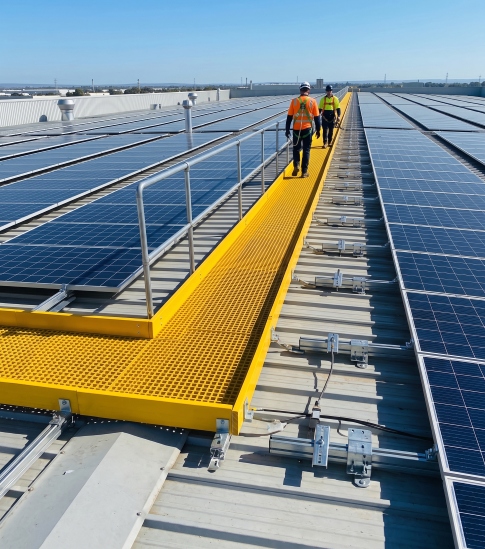
    As solar photovoltaic (PV) systems become standard features on commercial, industrial, and residential roofs, ensuring safe and efficient maintenance has become a critical challenge. Walking directly on solar panels? That is a huge mistake. Not only does it create dangerous fall hazards for workers, but it also causes invisible micro-cracks in the panels, leading to permanent losses in power generation. To completely solve this pain point, the FRP (Fiberglass Reinforced Plastic) Solar Rooftop Walkway System was born. Designed specifically for safe roof access and inspection, it perfectly blends durability, electrical insulation, and anti-slip safety. Today, let’s dive into why this piece of equipment is an absolute necessity for your solar infrastructure. What is the FRP Solar Rooftop Walkway System? An FRP solar walkway is a modular pathway system designed specifically for rooftop solar arrays, primarily consisting of high-strength FRP grating and mounting brackets. Crafted from premium weather-resistant composite materials, its core mission is simple: to provide a secure, anti-slip access route for maintenance personnel while protecting your fragile roof structure and expensive solar panels from foot traffic damage.   Core Features & Benefits 🌟 1. 🛡️ Lightweight yet High-Strength (Zero Roof Burden) FRP is significantly lighter than traditional steel or concrete, ensuring no unnecessary dead weight is added to your existing roof structure. Despite its light weight, it boasts incredible load-bearing capacity, easily supporting the high-frequency movement of maintenance crews and their heavy cleaning equipment. 2. 🌦️ Weather & Corrosion Resistant In harsh outdoor environments, metal rusts and wood rots. FRP, however, offers outstanding resistance to UV rays, acid, and alkali corrosion. Whether installed in heavily industrialized zones, coastal salt-fog areas, or under extreme climate conditions, it maintains a remarkably long operational lifespan. 3. 🥾 Ultimate Anti-Slip Protection When working at heights, safety always comes first! High-quality FRP walkways feature specialized anti-slip surfaces (such as gritted tops or concave edges). Even on wet, rainy days or steeply sloped roofs, they provide maximum shoe-grip, effectively preventing dangerous slips and falls. 4. ⚡ Excellent Electrical Insulation Navigating around a live solar power plant requires strict electrical safety. FRP materials are naturally non-conductive and non-magnetic. By cutting off the risk of electric shock at the source, it makes routing, inspection, and maintenance work significantly safer. 5. 🛠️ Easy Installation & Low Maintenance The system supports modular assembly, making it incredibly easy to cut and install on-site. It easily adapts to various roof profiles, including metal standing seam, trapezoidal, and concrete flat roofs. Better yet, it requires zero painting or rust removal, saving you a substantial amount of long-term maintenance costs.   Why is an FRP Walkway a "Must-Have" for Solar Roofs? Protects Solar Assets: It completely prevents workers from stepping on panels to take shortcuts, eliminating the risk of internal "micro-cracks" and ensuring optimal long-term power generation. Extends Roof Life: Effectively isolates foot traffic, preventing the roof's waterproofing membrane or seams from cracking and leaking due to uneven pressure. Ensures Safety Compliance: Meets international industrial safety and fall-protection standards, shielding facility managers and enterprises from workplace accidents and compliance liabilities.   Conclusion Investing in a high-quality FRP Solar Rooftop Walkway System isn't just about making it easier to walk around—it’s a direct responsibility toward worker safety and a smart, long-term protection strategy for your solar assets. For any solar project looking to balance safety and operational efficiency, this is an infrastructure upgrade with incredibly high returns.   Are you preparing for a solar rooftop project? We provide technical consulting and structural support to ensure your assets are built on a solid foundation.   Contact us at: fred@sunnect-solar.com  
  • Transforming the Urban Landscape: The Rise and Profound Impact of Solar Carports
    Transforming the Urban Landscape: The Rise and Profound Impact of Solar Carports
    Oct, 14 2026
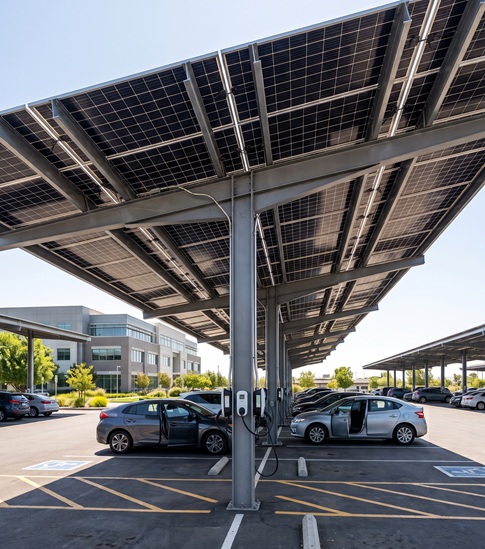
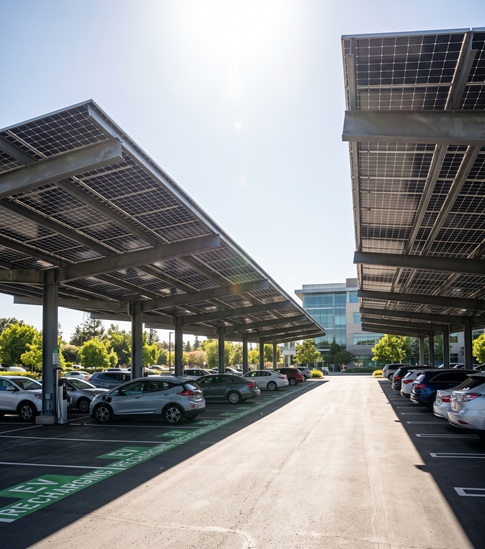
    Parking lots are an inescapable and ubiquitous staple of modern urban and suburban infrastructure. Whether wrapped around massive shopping malls, sprawling across corporate campuses, or lining municipal government centers, these vast stretches of asphalt are rarely recognized as prime real estate. In fact, they are often viewed as necessary eyesores that absorb heat and contribute to the urban heat island effect. However, with the rapid expansion of renewable energy technologies and a global push toward sustainability, a profound paradigm shift is underway. Solar carports are reimagining these dormant, single-use spaces as active, decentralized power stations. By generating clean electricity, slashing utility expenses, and providing valuable vehicle shelter, solar carports are pushing the boundaries of sustainable design. Here is a comprehensive look at how this innovative technology is reinventing the everyday parking space.   Understanding Solar Carports  A solar carport is essentially an elevated structural canopy outfitted with photovoltaic (PV) panels, purposefully built directly over existing parking areas. Unlike traditional rooftop arrays—which are limited by roof size, angle, and structural integrity—or ground-mounted solar farms that require vast tracts of undeveloped land, these structures offer a brilliant, dual-purpose solution. They are engineered from durable materials, such as high-grade structural steel, to withstand heavy winds and snow loads, all while being precisely angled to capture optimal sunlight. From sprawling commercial complexes to everyday residential driveways, they represent a highly versatile, scalable, and practical investment that seamlessly integrates into existing infrastructure without displacing natural habitats.   Core Advantages: 1. Optimizing Dormant Space and Preserving Land Expansive parking lots typically serve a single, passive function: temporary vehicle storage. In densely populated urban areas where land is at a premium, finding space for large-scale renewable energy projects is a significant logistical hurdle. Solar canopies activate these massive, underutilized footprints, transforming them into clean energy hubs without requiring the purchase, zoning, or development of additional land. This is particularly crucial for environmental conservation, as it prevents the clearing of forests or agricultural land that is often required for utility-scale solar farms. 2. Driving Clean Energy Production and Grid Resilience By converting abundant sunlight into usable electricity, these structures serve as vital allies in the global fight against climate change. They empower corporations, municipalities, and homeowners to significantly shrink their carbon footprints and pivot away from polluting fossil fuels. Beyond environmental stewardship, distributed energy generation via solar carports enhances local grid resilience. By producing power precisely where it is consumed—often during peak daylight hours when commercial energy demand is at its highest—carports alleviate strain on aging municipal power grids and reduce transmission losses. 3. Slashing Energy Expenses and Ensuring Financial Stability Power generated on-site translates directly to a dramatically reduced reliance on the traditional power grid and significantly lower monthly utility bills. Furthermore, solar carports act as a powerful financial hedge against the volatile and ever-increasing costs of traditional energy markets. Through net metering programs available in many regions, property owners can often sell surplus energy back to their local utility providers, turning a sunk infrastructure cost into a revenue-generating asset. With financing options like Power Purchase Agreements (PPAs), many organizations can even install these systems with zero upfront capital. 4. Shielding Vehicles and Elevating the User Experience Beyond the impressive metrics of energy production, carports act as protective architectural shields that offer immediate, tangible benefits to users. They safeguard cars from harsh environmental elements, including baking sun, heavy rain, hail, and snow. This protection helps preserve vehicle exteriors, but more importantly, it ensures a vastly superior and comfortable experience for drivers. During sweltering summer months, parking in the shade dramatically reduces cabin temperatures, minimizing the need for heavy air conditioning use upon startup, thereby saving fuel and reducing localized tailpipe emissions. 5. Powering the Electric Vehicle (EV) Revolution The integration of electric vehicle (EV) charging stations into solar carports is a natural and highly synergistic pairing. As the automotive industry transitions toward electrification, the availability of reliable charging infrastructure remains a hurdle. By fueling EVs with locally generated, 100% renewable energy right where people work or shop, organizations can accelerate the transition toward zero-emission transportation. This effectively eliminates the paradox of charging a "green" electric car with electricity generated by burning coal. Forward-looking installations are even exploring vehicle-to-grid (V2G) technologies, where plugged-in EVs can act as temporary energy storage.   Real-World Implementation and Corporate Leadership The adoption of solar carports is accelerating exponentially across multiple sectors, including retail centers, academic campuses, hospitals, sports stadiums, and corporate headquarters. Major Fortune 500 companies have championed this approach, powering their massive facilities while offering green charging solutions as a premium perk to staff and patrons. This visible commitment to sustainability goes beyond operational efficiency; it serves as a powerful branding tool that boosts Environmental, Social, and Governance (ESG) scores, attracts eco-conscious consumers, and aids in recruiting top-tier talent. Similarly, universities and local governments leverage these installations to cut long-term operational budgets while publicly showcasing their environmental commitments to their communities.   What Lies Ahead: The Future of Urban Energy  As photovoltaic technology improves—yielding higher efficiency panels, bifacial modules that capture reflected light from the pavement, and aesthetically pleasing transparent solar glass—solar carports will become a standard feature of modern urban planning. Coupled with advancements in on-site battery storage, businesses will soon be able to store the solar energy generated during the day to power facilities through the night. Bolstered by government incentives, tax credits, and continuously plummeting hardware costs, these structures will only become more financially compelling.   The Road Forward  Solar carports represent a monumental shift in renewable energy infrastructure, elegantly turning vast stretches of passive asphalt into highly valuable, power-generating assets. By capitalizing on these ubiquitous and underutilized areas, society can drive down soaring energy costs, champion genuine sustainability, and dramatically accelerate the green transition. Ultimately, investing in a solar carport is much more than just a savvy financial decision or a nod to corporate responsibility—it is a concrete, highly visible step toward building a cleaner, resilient, and self-sustaining future for our urban landscapes.   Are you preparing for a solar canopy project? We provide technical consulting and structural support to ensure your assets are built on a solid foundation.   Contact us at: fred@sunnect-solar.com    
  • A Homeowner's Guide to Choosing the Right Solar Mounting System
    A Homeowner's Guide to Choosing the Right Solar Mounting System
    Oct, 13 2026
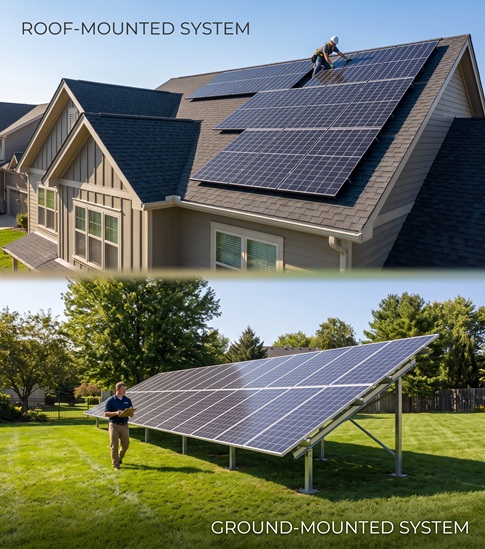
    As sustainable energy becomes increasingly popular, more homeowners are turning to solar power to reduce their reliance on the grid. However, going solar isn't just about picking the right panels; choosing the proper mounting system is equally crucial. The mount you select directly influences the overall cost, energy efficiency, and lifespan of your solar array.   Residential solar mounts generally fall into two main categories: roof-mounted and ground-mounted systems. Here is a breakdown of what each offers to help you find the best fit for your home.   Roof-Mounted Solar Systems Roof-mounted installations are the most common choice, utilizing existing structural space rather than taking up room in your yard. Flush-Mounted Systems: These are installed parallel to pitched roofs. They are highly cost-effective, simple to install, and offer a sleek, low-profile aesthetic. The downside is that their angle is entirely dependent on your roof's existing slope, and the tight spacing can limit airflow, occasionally causing panels to heat up and lose slight efficiency. Tilt-Mounted Systems: Designed primarily for flat or poorly angled roofs, these allow panels to be tilted to the optimal angle for maximum sun exposure. They provide excellent ventilation under the panels, which boosts performance. However, they have a higher visual profile, cost more, and require robust structural support to handle increased wind resistance. Ballasted Systems: Instead of drilling into the roof, ballasted systems are held in place by heavy weights. This eliminates the risk of roof leaks and makes installation straightforward. Because of the added weight, your roof must be structurally sound enough to support it, and this method is generally not recommended for high-wind areas.   Ground-Mounted Solar Systems If your roof is old, shaded, or simply too small, ground-mounted systems are an excellent alternative—provided you have the open land. Standard Ground Mounts: These systems anchor solar panels to a racking structure on the ground. They eliminate roof limitations altogether, allowing you to position the array at the perfect angle for maximum energy generation. They are also incredibly easy to access for cleaning and maintenance. On the flip side, they require significant yard space, and the necessary groundwork and permits make them more expensive to install. Pole-Mounted Systems: These elevate panels on a single heavy-duty post. They take up a smaller footprint than standard ground mounts and are often compatible with solar tracking technology, which follows the sun's movement to maximize energy output. The trade-off is that the tracking mechanics make them the most expensive option and require more ongoing maintenance.   Key Factors to Consider When deciding which system is right for you, weigh the following considerations: Roof Condition and Space: A newer, angled roof is perfect for a flush mount. If your roof needs replacing soon, it is better to look at ground mounts or wait until the roof is repaired. Budget: Roof-mounted systems typically have lower upfront installation costs, whereas ground mounts require land preparation and structural framing. Aesthetics: Consider whether you prefer the discrete look of flush roof panels or don't mind a ground array occupying part of your landscape. Local Climate: If you live in an area prone to extreme winds or heavy snow, you will need to choose a mounting structure specifically rated for those conditions.   Ultimately, the best mounting system is the one that aligns with your property's layout, your budget, and your energy production goals.   Are you preparing for a solar canopy project? We provide technical consulting and structural support to ensure your assets are built on a solid foundation.   Contact us at: fred@sunnect-solar.com    
  • Understanding Solar Trackers: Types, Benefits, and How They Work
    Understanding Solar Trackers: Types, Benefits, and How They Work
    Oct, 12 2026
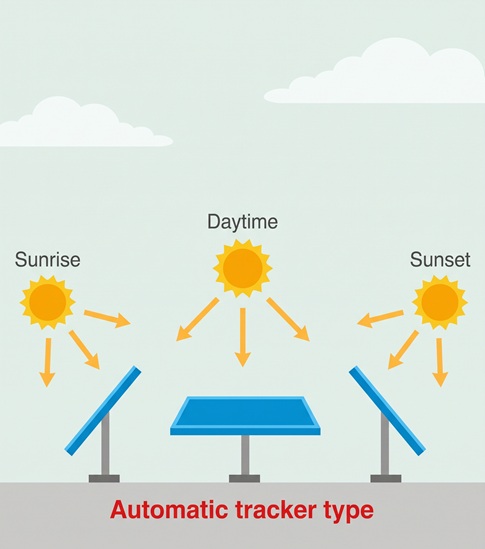
    What Are Solar Trackers and How Do They Work? Solar trackers are advanced mechanical devices designed to maximize the efficiency of solar energy collection. Instead of remaining static, these systems adjust the orientation of photovoltaic panels to continuously point toward the optimal position of the sun. Using sophisticated sensors and real-time algorithms, trackers ensure that the panels remain perpendicular to the sun's rays throughout the day, capturing as much solar radiation as possible.   Types of Solar Trackers There are two main types of tracking systems, each offering distinct benefits: Single-Axis Trackers: These systems move in one direction—from east to west—following the sun's daily path from sunrise to sunset. This movement significantly increases daily energy collection. Dual-Axis Trackers: Moving in two directions (east to west and north to south), these trackers provide highly precise alignment year-round. By adapting to the seasonal shifts in the sun's position, they ensure reliable performance regardless of the climate or time of year.   Key Advantages Increased Efficiency: Installing solar trackers can boost a system's overall performance by up to 40%. Single-axis models typically improve efficiency by 25% to 30%, while dual-axis models add an extra 5% to 10%. High Profitability: Though they require an upfront investment, solar trackers usually pay for themselves within 5 to 10 years, yielding significant financial returns over a 20-year (or longer) lifespan. Ideal for High Latitudes: Trackers are highly adaptable to seasonal changes, making them perfect for geographic locations where the sun's angle varies greatly throughout the year. Maximized Sunlight Generation: Trackers take full advantage of early morning and late evening sunlight, extending the hours of peak energy production. Extended Panel Lifespan: With proper maintenance, trackers can actually prolong the life of solar panels by reducing both mechanical and thermal stress.   Upgrading Existing Photovoltaic Installations Solar tracking systems can also be retrofitted to existing solar arrays to drastically improve their output. Modern integrations use state-of-the-art sensors to gather real-time environmental data and Artificial Intelligence (AI) to continuously analyze and adjust the panels' trajectory. Adding trackers to an existing site involves a step-by-step process: Assessment and Design: Evaluating the site and creating a structured plan. Selection: Choosing innovative tracking solutions tailored to the specific setup. Installation: Building new support structures to house the trackers and panels. Integration: Connecting the new electronics to the panels and conversion systems while meeting safety standards. Calibration and Monitoring: Testing the trackers for accuracy and monitoring them long-term to guarantee optimal performance.   Are you preparing for a solar canopy project? We provide technical consulting and structural support to ensure your assets are built on a solid foundation.   Contact us at: fred@sunnect-solar.com  
  • The Core Benefits of Single-Post Solar Carport Structures
    The Core Benefits of Single-Post Solar Carport Structures
    Sep, 21 2026
    As the world accelerates its transition toward renewable energy, city planners, commercial real estate developers, and business owners are increasingly asking the same question: How can we use our existing urban spaces more intelligently? Often, the most effective answer is hiding in plain sight—our everyday parking lots.   Traditional ground-mounted solar power plants require vast expanses of vacant land, which is a luxury in urban environments. Solar carports, however, offer an ingenious solution. They transform idle parking spaces into micro-power plants while simultaneously providing vehicles with much-needed protection from the elements.   Yet, the design of solar carports is constantly evolving. While the older, multi-post (or double-column) carports are structurally sound, they have historically introduced significant friction into the daily parking experience. Today, the Single-Post Solar Carport Structure is rapidly emerging as the premier choice for commercial properties, corporate campuses, and large-scale public facilities.   But what exactly makes the single-post structure stand out in a crowded market? In this comprehensive guide, we will dive deep into the core advantages of this innovative design and explore why it represents the future of commercial solar integration.   1. Ultimate Space Optimization: Delivering "Door-Opening Freedom" Anyone who owns or manages a parking facility knows that space is money, and user experience is paramount. Traditional multi-post solar carports often feature dense support columns positioned directly between adjacent parking spaces. This design significantly narrows the usable width of each spot, creating a claustrophobic experience for drivers. More importantly, it dramatically increases the risk of drivers and passengers banging their doors against steel columns or scratching their vehicles while maneuvering. The single-post structure—typically utilizing a T-frame, Y-frame, or cantilevered design—perfectly resolves this widespread pain point. By concentrating the core load-bearing columns either at the front of the parking spaces or along the central axis of back-to-back spots, it completely clears the side areas of any physical barriers. Obstacle-Free Access: Drivers and passengers can swing their doors wide open without gingerly trying to avoid a massive steel beam. This is especially crucial for modern vehicles, particularly larger SUVs and trucks. Reduced Accident Rates: The spacious entry and exit angles significantly lower the risk of low-speed collisions and scrapes when drivers are reversing into or pulling out of spots, ultimately reducing property damage disputes for facility managers.   2. Minimalist Aesthetics: Elevating Commercial and Brand Value In modern architectural design, the seamless unification of form and function is the ultimate goal. For high-end shopping centers, corporate headquarters, or state-of-the-art tech parks, installing a heavy, industrial "steel jungle" in the front parking lot can severely disrupt the aesthetic harmony of the property. Single-post solar carports break away from the bulky, utilitarian feel of traditional industrial equipment. With their streamlined, modern, and often cantilevered designs, they look more like contemporary urban sculptures than conventional power plants. This high-tech, clean appearance effortlessly blends into various architectural styles. Furthermore, it serves as a highly visible, physical manifestation of a company’s commitment to ESG (Environmental, Social, and Governance) principles. A sleek solar carport immediately signals to clients, employees, and investors that your brand is forward-thinking and dedicated to sustainable development.   3. Seamless Integration with EV Infrastructure and ADA Compliance With the rapid proliferation of Electric Vehicles (EVs), combining solar carports with EV charging stations is no longer a luxury—it is an industry standard. The single-post structure exhibits distinct, built-in advantages for this integration: All-in-One Charging Stations: The robust central support column serves as the perfect mounting point for EV charging hardware, wiring, and electrical components. Conduits and cables can be entirely hidden within the hollow interior of the post. This not only ensures electrical safety and protects wires from vandalism or weather damage but also eliminates the extra costs and footprint of building separate concrete bases for standalone chargers. Wheelchair and ADA Friendliness: Designing for accessibility is a legal and moral imperative. For disabled parking spaces requiring wheelchair ramps and wide access aisles (such as ADA-compliant spots in the US), multi-post structures often block necessary clearance. The single-post design leaves the side perimeters completely open, making the layout of fully compliant, accessible parking spots incredibly straightforward.   4. Streamlined Construction and Reduced Surface Disruption Retrofitting an existing asphalt or concrete parking lot with a solar carport comes with a major headache: foundation excavation. Traditional two-post or four-post structures require extensive digging, trenching, and concrete pouring across the entire footprint of the lot. This translates to prolonged construction schedules, widespread destruction of the existing pavement, and significant downtime during which the parking lot cannot generate revenue or serve customers. While a single-post structure requires a deeper and stronger foundation for its individual mounting points, the total number of foundation holes required is slashed by half or more. This results in several critical logistical benefits: Drastically reduced earthwork and soil removal. A significantly lower risk of accidentally striking and damaging underground utilities (water pipes, gas lines, telecommunication cables). Faster overall installation times, allowing the parking facility to resume normal operations and revenue generation much quicker.   5. Superior Engineering Stability and Effortless Maintenance A common misconception among first-time buyers is that a structure with half the posts might be less capable of withstanding extreme weather. Can a single-post carport survive heavy gales or massive snow accumulation? The answer is a resounding yes. Modern single-post solar carports are engineered using high-yield carbon steel or lightweight, ultra-strong aluminum alloys. They are subjected to rigorous aerodynamic modeling and structural engineering calculations. Supported by deep, robust independent foundations, these mainframes are specifically designed to meet and exceed local building codes for extreme Wind and Snow Loads. Furthermore, from an Operations and Maintenance (O&M) perspective, the single-post design is vastly superior. The area beneath the canopy is wide open, free of structural blind spots. This means: Effortless Cleaning: Snowplows and mechanical street sweepers can navigate the aisles without weaving through a maze of metal posts, cutting maintenance time in half. Enhanced Security: Unobstructed sightlines ensure that security cameras have no blind spots, and security personnel can easily monitor the entire lot, creating a safer environment for users at night.   Conclusion The shift toward single-post solar carport structures is far more than a simple upgrade in industrial design. It represents the perfect intersection of user experience, architectural aesthetics, construction efficiency, and green energy generation. For forward-looking enterprises and real estate developers, investing in a single-post solar carport goes beyond merely offsetting future utility bills with clean energy. It is a strategic investment in creating a safer, more modern, and highly comfortable environment for your employees and customers. As the transition to green energy becomes a mandatory step for modern businesses, choosing the smartest structural design ensures that your return on investment is truly maximized.
  • Steel vs. Aluminum Solar Mounting Structures: Which is the Best Fit for Your Project?
    Steel vs. Aluminum Solar Mounting Structures: Which is the Best Fit for Your Project?
    Sep, 16 2026
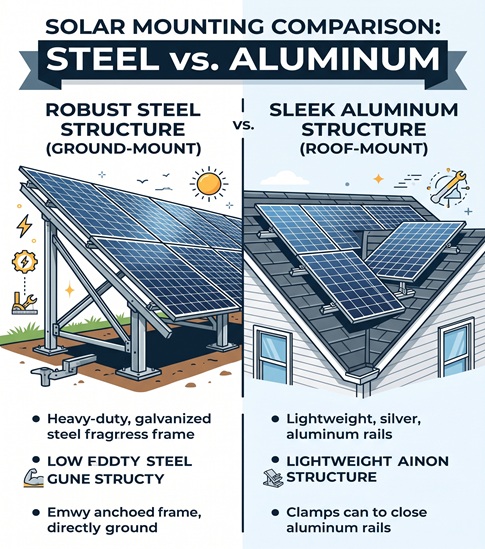
    Choosing the right solar mounting structure is one of the most critical decisions in any solar energy project. While the solar panels are responsible for generating electricity, the mounting framework is what keeps them securely in place, perfectly angled, and operating efficiently for decades.   The two most popular materials in the industry are steel and aluminum. Each brings its own set of unique advantages depending on your budget, installation environment, and structural requirements. Here is a deep dive into how they compare.   1. Steel Solar Mounting Structures: The Heavyweight Champion Steel is widely recognized for its exceptional structural strength and load-bearing capacity, making it the go-to choice for massive commercial, industrial, and utility-scale solar projects. Key Advantages: Exceptional Strength: Easily supports heavy loads and withstands significant environmental stress. Cost-Effective: Generally offers a lower initial material cost, making it highly economical for large-scale utility projects. Durable: When properly galvanized, a steel structure can reliably serve a project for 25 to 30 years. Main Limitations: Heavier Weight: The sheer weight of steel makes transportation and installation more labor-intensive and time-consuming. Maintenance Needs: If the galvanized protective coating is scratched or damaged, the exposed steel is susceptible to rust, requiring periodic maintenance. Best For: Ground-mounted solar plants and heavy-duty industrial projects.   2. Aluminum Solar Mounting Structures: The Lightweight & Resilient Choice Aluminum is increasingly becoming the preferred material for rooftop installations and projects in challenging climates due to its lightweight nature and superior rust resistance. Key Advantages: Lightweight Design: Significantly reduces the structural load on building roofs. Naturally Corrosion-Resistant: Excellent at withstanding rust, even in humid, salty, or coastal environments. Fast Installation & Low Maintenance: The lighter weight allows for quicker, easier installation, and the material requires virtually no maintenance over its 30+ year lifespan. It is also 100% recyclable. Main Limitations: Higher Upfront Cost: The initial purchase price of aluminum is generally higher than that of steel. Lower Load-Bearing Capacity: While very strong, it may not match steel when it comes to the extreme structural demands of massive utility-scale ground mounts. Best For: Rooftop solar systems, commercial installations, and coastal/high-humidity areas.   3. Quick Comparison Matrix Feature Steel Structures Aluminum Structures Weight Heavy Lightweight Corrosion Resistance Good (requires galvanization) Excellent (naturally resistant) Installation Moderate / Labor-intensive Fast & Easy Maintenance Moderate Very Low Expected Lifespan 25–30 Years 30+ Years Initial Cost Lower Higher Structural Strength Excellent Very Good Ideal Application Ground-mounted & Industrial Rooftop, Commercial & Coastal Recyclability Yes 100% Recyclable   Conclusion: How to Make Your Decision There is no "one size fits all" answer; the best material depends entirely on the specific needs of your project. Choose Steel if: You are developing a large-scale, ground-mounted utility plant, your project requires heavy structural support, and keeping initial material costs low is a top priority. Choose Aluminum if: You are installing a rooftop system where weight is a concern, you want to speed up installation time, you prefer a maintenance-free setup, or your project is located in a coastal area prone to salty air and high humidity.
  • The Advantages of Solar Street Lights
    The Advantages of Solar Street Lights
    Sep, 07 2026
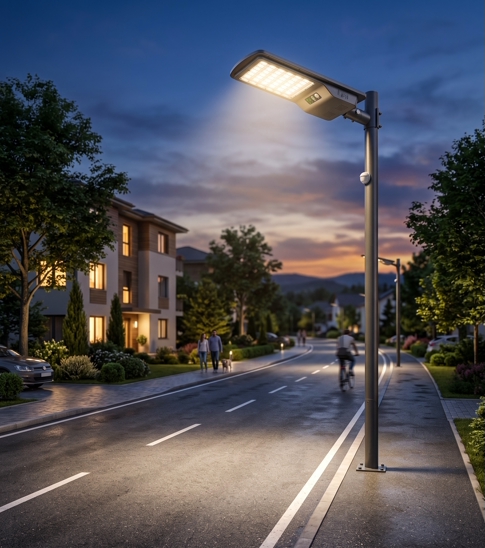
    As global urbanization accelerates and the urgent need for sustainable infrastructure grows, solar-powered street lights have emerged as a revolutionary solution for illuminating public spaces worldwide. By harnessing the abundant and renewable energy of the sun, these modern lighting systems go far beyond simple illumination. They provide a wide array of financial, environmental, and practical benefits, making them a cornerstone of modern "smart city" development and rural empowerment.   Here is an in-depth look at the advantages of integrating solar street lighting into your next project: 1. Unmatched Cost-Efficiency and High ROI The most immediate benefit of solar street lights is the drastic reduction in operational costs. Because they run entirely on captured sunlight, they completely eliminate monthly electricity bills. This shields municipalities and businesses from unpredictable fluctuations in the energy market. Furthermore, the long-term Return on Investment (ROI) is exceptional, allowing organizations to reallocate funds that would normally be spent on utility bills toward other vital community projects.   2. Profound Eco-Friendly Impact Utilizing renewable energy is one of the most effective ways to drastically reduce a community’s carbon footprint. Traditional grid-tied street lights rely heavily on fossil fuels, contributing significantly to global warming. By switching to solar alternatives, you actively lower air pollution and CO2 emissions. This sustainable approach helps cities meet their net-zero climate goals and protects local ecosystems for future generations.   3. Complete Grid Independence and Resilience Equipped with high-efficiency solar panels and deep-cycle batteries, these lights generate, store, and manage their own power independently. A standard 6 to 8-hour charge under direct sunlight can provide up to 12 to 15 hours of reliable nighttime illumination. Because they operate off-grid, solar lights are immune to local power outages, rolling blackouts, and infrastructure failures, ensuring that streets remain safely lit even during extreme weather events or grid emergencies. 4. The Perfect Solution for Remote and Challenging Locations The self-sustaining nature of solar lighting makes it the ultimate choice for areas where extending the electrical grid is physically impossible or prohibitively expensive. They are widely deployed in rural villages, isolated highways, remote construction sites, and disaster recovery zones. They bring safety and visibility to off-grid communities without the need for massive infrastructure investments.   5. Hassle-Free Installation and Minimal Disruption Installing traditional street lights requires extensive trenching, underground wiring, and repaving, which disrupts traffic and drives up labor costs. Modern solar lights—especially "all-in-one" designs that seamlessly integrate the LED fixture, solar panel, and battery into a single sleek unit—eliminate this complex groundwork. They offer a simple "plug-and-play" installation process that requires minimal manpower and can be completed in a fraction of the time.   6. Automated Smart Operation and IoT Integration Today's solar street lights are equipped with intelligent charge controllers and environmental sensors. They automatically detect ambient light levels, turning on at dusk and off at dawn without any human intervention. Many advanced models also feature motion sensors (PIR) that keep the light at a dim, energy-saving level when the area is empty, instantly brightening to 100% capacity when a pedestrian or vehicle approaches.   7. Enhanced Public Safety and Security Bright, consistent lighting is a proven deterrent to crime and significantly reduces nighttime traffic accidents by improving driver visibility. Additionally, solar street lights operate on low-voltage Direct Current (DC), completely eliminating the risk of fatal electrocution associated with high-voltage Alternating Current (AC) wiring. Some commercial units even feature integrated, solar-powered security cameras to monitor public spaces continuously.   8. Exceptional Durability and Low Maintenance Because high-quality LED components and modern lithium batteries operate under less thermal stress than traditional high-pressure sodium lamps, solar lights boast an impressively long lifespan. Built with weather-resistant materials (often IP65-rated or higher), they can withstand harsh elements such as heavy rain, snow, and extreme heat for up to 10 years. Integrated smart sensors can also alert maintenance teams to specific component faults, making routine check-ups fast and incredibly cheap.   A Brighter, Greener Future Awaits Solar street lighting is the ultimate, forward-thinking solution for eco-conscious, affordable outdoor illumination. A single high-powered solar street light can easily and effectively illuminate an area of over 2,700 square feet.   To put the environmental impact into perspective: a single traditional street lamp produces approximately 144 kg of CO2 annually. By transitioning thousands of lights to solar power, we can eliminate massive amounts of greenhouse gases and drastically improve global air quality.   If you are ready to upgrade your infrastructure with reliable, sustainable, and cost-effective lighting, send us an inquiry today to receive a customized, affordable quote for your project! Contact us at: fred@sunnect-solar.com  
  • Mini Rails vs. Long Rails: Engineering the Right Solar Roof Architecture
    Mini Rails vs. Long Rails: Engineering the Right Solar Roof Architecture
    Aug, 28 2026
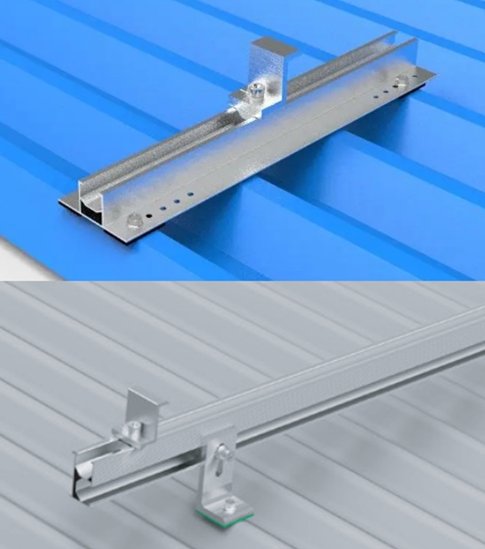
    The mounting structure represents the second-largest driver of embodied carbon in a solar PV system. Selecting between short, segmented profiles and continuous long rails is not a mere installation footnote; it is a fundamental engineering and commercial decision.   Every solar deployment begins with this critical structural choice. Before specifying inverters or configuring cable runs, the mechanical interface with the roof must be established. The market is defined by two primary solutions: continuous horizontal rails and localized mini rails. They are not interchangeable, and the distinction dictates structural load paths, supply chain efficiency, and project margins.   The Mechanics of Mini Rails Mini rails are compact aluminum extrusions, typically spanning 250 mm to 600 mm. Rather than deploying full-length continuous tracks across a roofspan, installers position two targeted profiles beneath each module—securing the top and bottom edges prior to final clamping.   Optimal Application Engineered specifically for trapezoidal and corrugated metal roof sheets, these components anchor directly into the roof crest. They utilize self-drilling fasteners integrated with EPDM rubber backing, which instantly compresses to form a robust, weatherproof seal. This localized approach eliminates the need to locate underlying purlins or navigate complex roof flashing.   Advantages: Material Efficiency: Achieves a 30–50% reduction in aluminum mass compared to continuous baseline systems. Commercial Viability: Delivers 25–40% lower overall project costs when factoring in material CAPEX, labor, and logistics. Logistical Optimization: Compact palletization maximizes shipping container density, allowing a standard commercial van to transport volumes that would otherwise require a flatbed truck. Agility: Lightweight design facilitates rapid deployment, often requiring only a single installer for smaller capacities.   Limitations: Load Distribution: Concentrates structural forces into point loads rather than dispersing them across a continuous beam. Environmental Variables: High-wind environments necessitate a higher density of localized fixings per module, which can incrementally offset initial material savings. Roof Compatibility: Strictly incompatible with non-structural roof skins such as tile, slate, or flat membrane surfaces.   The Mechanics of Continuous Long Rails Continuous long rails represent the traditional PV mounting architecture: full-length horizontal aluminum tracks aligned parallel to the roofline. Acting as primary structural beams, these extrusions distribute module weight and aerodynamic forces along their entire span, systematically transferring the load down into the building’s core structure through periodic anchor points. Optimal Application Long rails are the definitive engineering solution for tile, slate, flat membrane, and standing-seam profiles. They are mandatory for high-load environments, including aggressive snow zones, exposed coastal sites, and hurricane-rated geographies. Whether utilizing roof hooks that reach the structural rafters on a slate roof or non-penetrating clamps on a standing seam, the mechanical load path always terminates at the building's structural timber or steel, bypassing the outer roof covering entirely.   Advantages: Structural Integrity: The beam action effectively neutralizes localized point loads, smoothing out dynamic forces. Load Dispersal: Ensures uniform weight distribution across multiple structural members, a critical requirement when calculating against severe snow loads or wind uplift frameworks. Installation Tolerance: Highly forgiving of minor roof irregularities, permitting modules to slide laterally along the extrusion for precise coplanar alignment prior to final torqueing.   Limitations: Logistical Footprint: The bulky extrusions demand longer transit vehicles, increased shipping cycles, and higher freight overheads. Cost & Carbon: Drives up the baseline material CAPEX and embodied carbon per installed kWp. Deployment Velocity: Slower to install, typically mandating multi-person crews for maneuverability.   Comparative Specification Matrix Specification Mini Rails (Segmented Profiles) Continuous Long Rails Optimal Roof Architecture Trapezoidal & corrugated metal Tile, slate, flat, standing seam Mechanical Fastening Self-drilling screws with EPDM sealing into roof crests Roof hooks or structural brackets anchored to rafters Aluminum Footprint (per kWp) 30–50% reduction Industry baseline Overall Project CAPEX 25–40% reduction Industry baseline Extreme Wind & Snow Loads Requires augmented fastener density Native structural suitability Deployment Crew Frequently single-operator Multi-person requirement The Carbon and Logistical Nexus Beyond the photovoltaic modules themselves, the aluminum mounting structure is the second-largest driver of embodied carbon within a rooftop array. While this metric may not appear on standard commercial quotations, it is a glaring variable in any formal lifecycle assessment (LCA).   The root cause is the raw material. Primary aluminum smelting is one of the most energy-intensive industrial operations globally, consuming roughly 14 to 16 megawatt-hours of electricity per tonne. Even when powered by hydroelectricity, the carbon intensity of finished extrusions remains high; if coal-powered, the environmental toll is severe.   This makes mini rails the definitive eco-efficient solution for standard metal roofs. Achieving a 30–50% reduction in aluminum mass translates directly to a proportional drop in upfront embodied carbon. Furthermore, the compact pallet footprint drastically optimizes shipping container density, directly mitigating the Scope 3 transport emissions—and volatile freight overheads—associated with moving the hardware from the manufacturing facility to the installation site.   However, continuous long rails are structurally essential for incompatible roof skins or extreme load environments; substituting them in these scenarios compromises safety. The core issue is not the existence of long rails, but the industry habit of defaulting to them on standard trapezoidal metal structures where mini rails could achieve the same mechanical threshold with half the material. Every kilogram of aluminum optimized out of a system design is a kilogram saved from the smelter.   Strategic Deployment Criteria There is no universal solution, nor should there be. Mini rails and continuous rails are complementary architectures, with their deployment dictated by structural engineering frameworks, geography, and environmental targets: Metal roof, moderate load climate: Mini rails, almost exclusively. Tile, slate, membrane, or standing seam: Continuous long rails, without exception. Exposed, high-wind, or heavy-snow sites: Continuous long rails, regardless of the underlying roof skin. Marginal or mixed conditions: Dictated by strict structural calculation, not catalog default.   A competent engineering and installation team makes this selection deliberately on every project rather than relying on standard inventory habits. For environmentally and financially conscious procurement, the baseline question is: "Can this array be securely mounted using mini rails?" When the technical answer is yes, the low-carbon option aligns perfectly with the most cost-effective solution.   Executive Summary The structural framework is the second-largest source of embodied carbon in rooftop solar. Mini rails minimize the aluminum footprint and localize loads across multiple point fixings, while continuous long rails act as spanning beams to disperse heavy loads and accommodate irregular roof battens. The definitive choice must always be driven by the roof's mechanical capacity and environmental load parameters.   Are you preparing for a solar project? We provide technical consulting and structural support to ensure your assets are built on a solid foundation. Contact us at: fred@sunnect-solar.com    

  • Cable Trays in Solar PV Systems: Functions and Importance
    Cable Trays in Solar PV Systems: Functions and Importance
    Aug, 24 2026
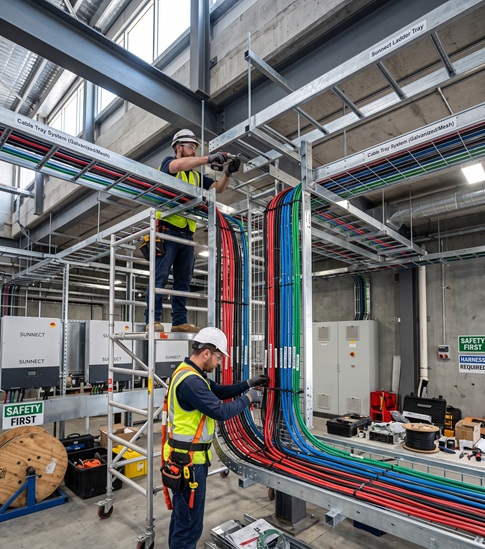
    While solar modules and inverters often steal the spotlight, cable management systems are the unsung heroes of photovoltaic (PV) projects. Cable trays protect, guide, and support PV cables, directly impacting electrical safety, system reliability, and long-term maintenance efficiency. Without them, even top-tier solar arrays risk severe electrical faults.   Here is a streamlined, professional rewrite of your article for maximum impact and readability.   Core Types of Cable Trays Selecting the appropriate tray structure depends on your project’s environment, thermal requirements, and routing complexity: Ladder Type: Provides superior heat dissipation; the standard choice for large ground-mounted plants running high-current DC cables. Perforated: Balances robust support with partial protection against falling objects; ideal for commercial rooftop flexibility. Wire Mesh: Lightweight and highly adaptable for complex cable routes, though it offers less mechanical protection than solid alternatives. Solid Bottom: Delivers maximum protection against debris, moisture, and chemical exposure for specialized industrial applications.   Material Selection Guide Choosing the correct material prevents premature corrosion and costly replacements. Material Key Characteristics Best Applications Hot-Dip Galvanized Steel High strength, economical, durable Large-scale ground-mounted plants Aluminum Alloy Lightweight, natural corrosion resistance Rooftops, coastal installations Stainless Steel (304/316) Superior corrosion and chemical resistance High-humidity, saline, or floating PV Essential Design & Installation Practices To ensure system longevity and safety, strict adherence to installation best practices is non-negotiable: Structural Integrity: Account for wind and snow loads, ensuring support spacing (typically 1.5 to 3 meters) prevents cable sagging and connection stress. Strategic Separation: Physically isolate DC arrays, AC grid cables, and communication lines to eliminate electromagnetic interference. Thermal Flexibility: Incorporate expansion joints on long runs to accommodate thermal expansion, contraction, and uneven ground contours. Grounding & Bonding: Properly ground all tray sections to create an equipotential system, providing a safe path for fault currents and mitigating shock hazards. Note: The most common design pitfalls include ignoring wind loads in open areas, mixing AC/DC cables without proper separation, and neglecting future maintenance access routes. Integrated Solutions by Sunnect Solar Whether integrating with front pillars on ground mounts, navigating delicate roof waterproofing membranes, or adapting to floating PV wave movements, properly engineered cable trays slash maintenance times and elevate safety. Sunnect Solar provides tailored, integrated mounting and cable management solutions—from heavy-duty ground systems to corrosion-resistant rooftop setups. By aligning the support network of your modules with your cabling infrastructure, we help build safer, more efficient, and highly reliable solar power systems.   Are you preparing for a solar project? We provide technical consulting and structural support to ensure your assets are built on a solid foundation. Contact us at: fred@sunnect-solar.com  

  • Types, applications and benefits of Solar Canopies
    Types, applications and benefits of Solar Canopies
    Aug, 17 2026
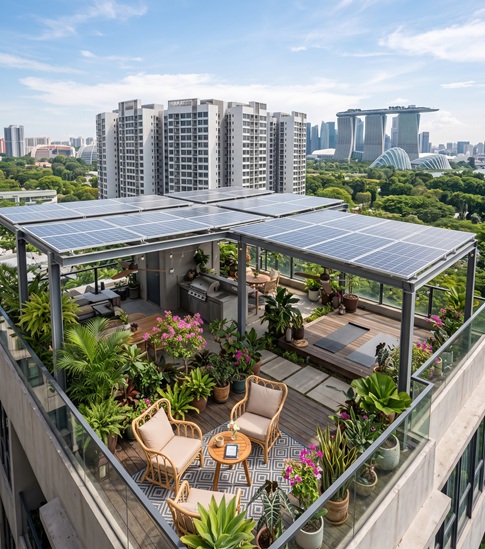
    A solar canopy is an elevated structural system designed to support photovoltaic (PV) modules above parking areas, walkways, patios, and open grounds. By combining overhead weather protection with clean energy generation, solar canopies maximize land-use efficiency without requiring dedicated acreage.   Engineered for a 25 to 30-year lifespan, these systems operate either as grid-tied configurations to leverage net metering or as off-grid setups with battery storage for resilient energy independence. While structural and foundation requirements entail higher upfront capital expenditure than standard rooftop mounting, solar canopies offer compelling long-term returns through vehicle protection, electric vehicle (EV) charging integration, reduced utility overhead, and increased property valuation.   Primary Structural Types Solar Carports: Built over residential driveways, commercial lots, and fleet terminals. They provide shade and weather shielding for vehicles while seamlessly integrating with EV charging infrastructure. Solar Pergolas: Open-framework architectural systems designed for gardens, terraces, and gathering zones, blending ambient light, partial shelter, and on-site power generation. Solar Gazebos: Freestanding, solid-roof structures optimized for parks, recreational facilities, and backyards, combining outdoor aesthetic appeal with reliable decentralized power. Solar Patio Covers: Attached directly to existing buildings or installed as standalone shade structures over decks and outdoor living spaces to lower ambient heat and power auxiliary loads.   Key Sector Applications Residential Shields driveways, carports, and outdoor assets from UV and severe weather. Expands functional outdoor living space across patios, decks, and gardens. Directly offsets household utility rates while powering outdoor lighting, pool pumps, and exterior amenities. Commercial & Industrial Transforms standard parking lots into power-generating hubs paired with level-2 or DC fast EV chargers for staff and clients. Provides energy-producing covered dining and lounge areas for hospitality venues. Lowers peak demand charges and operational expenses for manufacturing plants, logistics hubs, and warehouses. Public & Institutional Schools and Universities: Lowers operating costs while providing visible, real-world educational tools for sustainability. Healthcare Facilities: Couples solar generation with battery energy storage systems (BESS) to supply critical backup power during grid disruptions. Parks and Municipalities: Delivers off-grid, clean electricity for public lighting, municipal amenities, and community gathering grounds.   Advantages of Solar Canopies Solar canopies deliver practical, multi-functional value across residential, commercial, and public spaces by integrating clean power generation directly into everyday outdoor infrastructure. Dual-Purpose Functionality: Combines reliable overhead shelter from sun and precipitation with on-site renewable electricity generation, advancing clean energy independence. Maximum Land-Use Efficiency: Utilizes elevated mounting to preserve ground-level footprint, generating power over existing parking bays, patios, decks, or walkways without requiring dedicated land. Asset Protection & Reduced Maintenance: Shields vehicles, outdoor equipment, and patio furnishings from severe weather and UV degradation, extending asset lifespans and lowering upkeep costs. Architectural Appeal & Property Value: Upgrades outdoor environments with sleek, modern structural aesthetics while providing long-term utility savings that elevate overall real estate value.   Are you preparing for a solar canopy project? We provide technical consulting and structural support to ensure your assets are built on a solid foundation. Contact us at: fred@sunnect-solar.com    
  • Dual-Post Solar Mounting Systems: The Optimal Solution for High-Wind Installations
    Dual-Post Solar Mounting Systems: The Optimal Solution for High-Wind Installations
    Aug, 10 2026
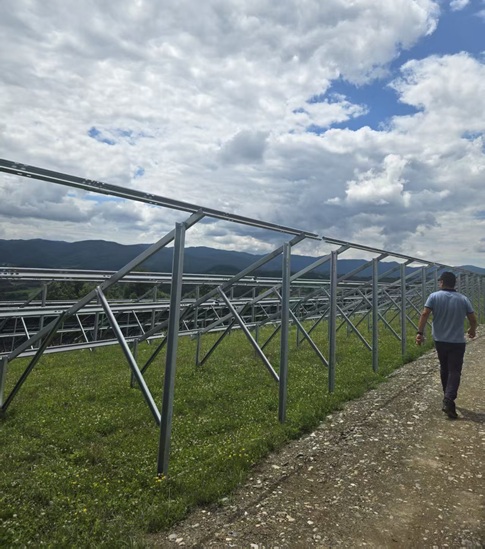
    As the global transition to solar energy accelerates, selecting the optimal mounting infrastructure is more critical than ever. The quality of a mounting system directly dictates the long-term durability, operational efficiency, and overall safety of any solar power plant.   Entering 2026, the Double-Post Solar Mounting System has firmly established itself as one of the most reliable and cost-effective solutions for commercial and industrial (C&I) projects. Purpose-built to conquer extreme weather—including high wind loads and torrential rain—as well as highly uneven terrain, these systems deliver uncompromising structural reinforcement for large-scale solar arrays.   What is a Double-Post Solar Mounting System? A double-post mounting system is a robust, ground-mounted framework that utilizes two vertical support columns to securely anchor photovoltaic panels. This dual-support architecture inherently provides: Optimized Load Distribution: Balances panel weight and environmental stressors evenly across the structure. Enhanced Structural Stability: Provides a rigid, unyielding foundation for the entire array. Superior Wind Resistance: Engineered to remain steadfast in severe weather conditions. Maximized Module Support: Perfectly suited to safely carry modern, large-format solar panels.   Primary Applications: Industrial Solar Projects: Manufacturing plants, large-scale warehouses, and factories. Utility-Scale Solar Farms: Expansive, high-capacity ground-mounted PV parks. Commercial Installations: Shopping complexes, educational institutions, and corporate facilities. Harsh Environment Regions: Geographic areas prone to heavy rainfall, gale-force winds, or challenging topographies.   5 Key Benefits of Double-Post Solar Structures: 1. Exceptional Wind Resistance A standout advantage of the double-post system is its unparalleled ability to endure severe weather. Rigorously engineered to withstand wind speeds of up to 180 km/h, these structures are highly recommended for: Coastal and high-wind regions Open industrial plains Large-scale solar farms Their robust structural integrity prevents panel displacement and guarantees long-term operational reliability. 2. Optimized Load Distribution: The dual-support architecture evenly disperses the physical weight of the solar panels and environmental pressures. This balanced distribution drastically minimizes localized stress, structural fatigue, and long-term material deformation, resulting in a significantly more stable array over time. 3. Ideal for Large-Format Modules: As modern solar projects increasingly adopt larger, high-capacity modules, double-post systems provide the requisite heavy-duty support. They offer tremendous flexibility, seamlessly accommodating multiple panel configurations and both landscape and portrait orientations. 4. Extended Structural Lifespan: Constructed primarily from hot-dip galvanized (HDG) steel and highly corrosion-resistant materials, these structures are built for longevity. Industrial clients benefit from supreme rust resistance, vastly reduced maintenance costs, and unwavering durability in harsh climates—ultimately maximizing long-term ROI. 5. Versatile Foundation Compatibility: Every project site is unique. Double-post systems adapt effortlessly to diverse soil conditions and topographical requirements by supporting multiple foundation types, including driven piles, concrete bases, and screw piles.   Technical Highlights: Engineered to meet stringent industrial standards, premium double-post systems feature: Extreme Weather Rating: Certified wind resistance up to 180 km/h. Layout Flexibility: Full compatibility with both portrait and landscape module arrays. Terrain Adaptability: Optimized for slopes and uneven ground conditions. Premium Hardware: High-grade aluminum clamps paired with stainless-steel fasteners. Robust Framework: Heavy-duty HDG/GI structural steel components. Streamlined Assembly: Intelligent design for rapid, tool-friendly module attachment.   Why Structural Quality is Non-Negotiable: Choosing the right mounting hardware is a vital investment in your solar plant's future. The Risks of Low-Quality Systems: Subpar mounts often lead to severe corrosion, panel misalignment, catastrophic wind damage, and escalating maintenance expenses. The Rewards of Engineered Systems: Investing in high-quality structures ensures uncompromising safety, consistent power generation, lowered operational costs, and an extended system lifespan of 25+ years. The Future of Solar Mounting Systems: As the solar industry evolves, mounting infrastructure is shifting toward: Ultra-high-strength, lightweight materials. Pre-assembled designs for drastically faster installation. Ultra-low maintenance engineering. Advanced, hyper-weather-resistant designs.   Frequently Asked Questions (FAQs): Q1: Which is better—a single-post or double-post solar structure? Double-post systems offer vastly superior stability, higher load-bearing capacities, and drastically improved wind resistance compared to single-post designs. Q2: Are double-post systems safe for high-wind areas? Absolutely. They are purpose-built for extreme weather and are rigorously tested to safely withstand wind speeds of up to 180 km/h. Q3: What materials are standard in premium mounting structures? Top-tier structures generally utilize hot-dip galvanized (HDG) steel for the primary framework, complemented by aluminum clamps and stainless-steel fasteners to prevent corrosion. Q4: Are these systems appropriate for industrial use? Yes. Their inherent strength and durability make them the industry standard for commercial, industrial, and utility-scale installations. Q5: What is the expected lifespan of a solar mounting structure? When engineered properly and heavily galvanized, a high-quality mounting structure will reliably perform for 25 years or more with minimal maintenance required.   Conclusion: A Double-Post Solar Mounting System is far more than a simple metal framework; it is the resilient backbone of a dependable solar installation. Offering unparalleled wind resistance, balanced load distribution, and profound long-term durability, these structures have rightfully become the preferred choice for modern solar projects across India. For industrial and commercial developers who prioritize lasting performance, investing in a robust, engineered double-post system guarantees maximum efficiency and highly optimized long-term returns.   Are you preparing for a utility-scale solar project? We provide technical consulting and structural support to ensure your assets are built on a solid foundation. Contact us at: fred@sunnect-solar.com    
  • The Invisible Backbone: A Deep Dive into Foundation Embedded Anchor Bolts for Solar Mounting
    The Invisible Backbone: A Deep Dive into Foundation Embedded Anchor Bolts for Solar Mounting
    Aug, 04 2026
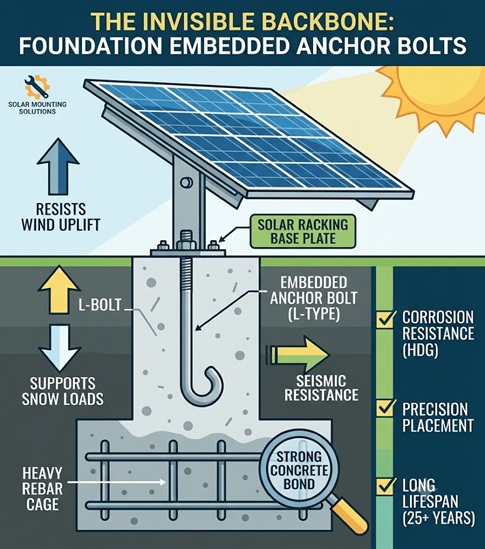
    When you look at a utility-scale solar farm or a robust commercial ground-mount system, your eyes are naturally drawn to the massive arrays of gleaming blue and black photovoltaic (PV) panels. You might notice the precision of the steel or aluminum racking holding them at the perfect angle to capture the sun. But beneath the surface lies the true hero of the entire structural system: the foundation embedded anchor bolt. While they account for only a fraction of a percent of a solar project's total budget, these heavy-duty fasteners carry 100% of the project's structural integrity. If the racking system is the skeleton of a solar array, the embedded anchor bolts are the tendons that bind that skeleton to the earth. In this post, we are going to explore what these critical components are, the immense forces they combat daily, material selection, and the precise sequence required to install them correctly.   What is a Foundation Embedded Anchor Bolt? In solar mounting systems, a foundation embedded anchor bolt (often referred to as a cast-in-place anchor) is a heavy-duty threaded steel rod that is cast directly into a wet concrete foundation—typically a concrete pier, footing, or ballast block. Unlike post-installed anchors (like expansion bolts or epoxy anchors that are added after the concrete has cured), embedded anchors are positioned before the concrete pour. Once the concrete cures around the embedded portion of the bolt, it creates an incredibly strong, permanent connection. The exposed threaded top of the bolt is then used to secure the base plates of the solar mounting structure using heavy-duty nuts and washers. These bolts typically feature a specific design at the embedded end to prevent them from pulling out under extreme tension. The most common shapes include: L-Bolts (or J-Bolts) Or U-Bolts: The bottom of the bolt features a 90-degree (or curved) bend that hooks under the concrete and rebar matrix. Headed Anchor Bolts: A straight threaded rod with a heavy forged hex head or a welded anchor plate at the bottom, providing a massive surface area to resist pull-out forces.   The Forces at Play: Why Anchor Bolts Are Critical Solar arrays act like massive sails. Because they are often installed in wide-open areas to maximize sun exposure, they are subjected to brutal environmental forces. Embedded anchor bolts are engineered to transfer three primary dynamic loads from the racking system directly into the concrete foundation: Wind Uplift (Tension): This is the most dangerous force a solar array faces. High winds hitting the angled face of a solar panel create an aerodynamic lift, much like the wing of an airplane. The anchor bolts must possess immense tensile strength to hold the entire structure down and prevent it from being ripped from its foundation. Snow Loads (Compression & Shear): In northern climates, heavy snow accumulation on panels creates massive downward pressure. While the concrete foundation handles most of the compressive load, the anchor bolts must resist the shear forces generated if the mounting structure attempts to slide or buckle under the uneven weight. Seismic Activity (Lateral & Shear): In earthquake-prone regions, ground acceleration causes violent lateral shaking. Embedded anchor bolts must be ductile enough to absorb these sudden horizontal shear forces without snapping. If an anchor bolt yields or pulls out, the racking system shifts. Even a shift of a few millimeters can induce micro-cracks in the silicon cells of the PV panels, severely degrading energy output. In worst-case scenarios, a bolt failure leads to catastrophic structural collapse during a storm.   Material Selection: The Battle Against Time and Elements Solar installations are designed to last 25 to 35 years. The foundation bolts spend this entire lifespan sitting exactly at ground level or just above it—a zone notorious for moisture accumulation, soil acidity, and fluctuating temperatures. Choosing the right material and coating is non-negotiable. Material / Coating Characteristics Best Use Case Hot-Dip Galvanized (HDG) Carbon Steel High strength carbon steel dipped in molten zinc. The zinc acts as a sacrificial anode, corroding before the steel does. The industry standard for 90% of inland solar projects. Excellent balance of cost, strength, and corrosion resistance. Stainless Steel (304 or 316 Grade) Naturally resistant to oxidation and rust due to chromium content. Type 316 includes molybdenum for added chloride resistance. Coastal environments with high airborne salt, or highly acidic soil conditions. More expensive but necessary for harsh environments. Epoxy-Coated Steel Standard steel bolts coated in a thick, durable epoxy resin to act as a physical barrier against moisture. Highly corrosive chemical environments or regions with stray electrical currents in the soil. Engineering Tip: When using HDG anchor bolts, the nuts and washers must also be HDG. Mixing metals (e.g., placing a stainless steel nut on a galvanized bolt) can trigger galvanic corrosion, rapidly accelerating the degradation of the fastener. The Installation Process: Getting It Right the First Time The primary challenge with cast-in-place anchor bolts is that once the concrete cures, there is zero margin for error. If a bolt is set slightly out of alignment, the base plate of the solar racking will not fit. This requires extreme precision during the foundation phase.   1.Foundation Excavation and Rebar Placement:Preparing the structural matrix. The site is excavated for the concrete piers or footings. A cage of reinforcing steel (rebar) is tied and placed into the excavation. This rebar gives the concrete its tensile strength and provides a framework to anchor the bolts against. 2.Setting the Anchor Bolt Template:Crucial for millimeter precision. Because solar racking base plates are pre-drilled at the factory, installers use a wooden or steel "template" at the top of the foundation form. This template holds the anchor bolts suspended in the exact configuration (spacing and orientation) required by the racking manufacturer. 3.Verifying Embedment Depth and Projection:Checking the engineering specs. Before any concrete is poured, the site engineer verifies two dimensions. First, the embedment depth (how much of the bolt will be buried in concrete) must meet wind-load requirements. Second, the projection (how much thread sticks out above the concrete) must be long enough to accommodate the base plate, leveling nuts, structural washers, and top nuts. 4.Pouring and Consolidating the Concrete: Concrete is poured into the formworks, flowing around the embedded anchor bolts. It is vital to use an industrial concrete vibrator during this step to eliminate air pockets (honeycombing) around the lower portion of the bolt, which would severely weaken its pull-out resistance. 5.Curing and Racking Installation:Do not rush the cure time. The concrete must be allowed to reach its specified compressive strength (usually 28 days for full strength, though racking can sometimes begin sooner based on engineer approval). Once cured, the templates are removed, the racking base plates are seated over the threaded projections, and the structural nuts are torqued to exact specifications.   Quality Assurance and Common Pitfalls Even with the best materials, poor execution can doom a project. Solar EPCs (Engineering, Procurement, and Construction companies) employ strict quality assurance measures for embedded bolts. 1. The Threat of "Plumb" Deviation If bolts are not set perfectly vertical (plumb), installers will struggle to get the racking base plates seated. While minor deviations can sometimes be fixed by slightly enlarging the holes on the aluminum racking base plate, extreme deviations force contractors to cut the bolt off entirely and attempt to retrofit a post-installed epoxy anchor—a costly, time-consuming nightmare that often requires requalifying the engineering stamps. 2. Pull-Out Testing On large utility-scale sites, independent third-party engineers will conduct random "pull-out tests." They attach a specialized hydraulic jack to the exposed threads of an embedded bolt and apply upward pressure that simulates a 100-year storm event. If the bolt slips, the concrete cracks, or the bolt yields before reaching the required load, the entire foundation design must be re-evaluated. 3. Torque Verification Once the solar racking is installed, the nuts on the anchor bolts must be tightened to a specific torque setting. Under-tightening leaves the structure vulnerable to vibration loosening during high winds; over-tightening can stretch the bolt past its yield point, permanently weakening the steel. Installers often use "torque marks" (a line of paint drawn across the bolt thread and nut) so inspectors can visually verify that the nut has not backed off months after installation.   Conclusion The next time you drive past a sprawling solar farm, take a moment to look past the high-tech, sun-tracking photovoltaic panels. Down in the dirt, hidden inside blocks of concrete, thousands of foundation embedded anchor bolts are silently doing the heavy lifting. By demanding precise engineering, uncompromising material quality, and flawless installation sequences, solar developers ensure that these critical fasteners will hold strong—safeguarding multi-million-dollar clean energy assets against whatever Mother Nature throws their way for decades to come.   Are you preparing for a ground solar project? We provide technical consulting and structural support to ensure your assets are built on a solid foundation. Ready to start your next project? Contact us at: fred@sunnect-solar.com      
Prex
1 2
Next

leave a message

leave a message
If you are interested in our products and want to know more details,please leave a message here,we will reply you as soon as we can.

Home

Products

whatsApp

Contact

leave a message
If you are interested in our products and want to know more details,please leave a message here,we will reply you as soon as we can.